
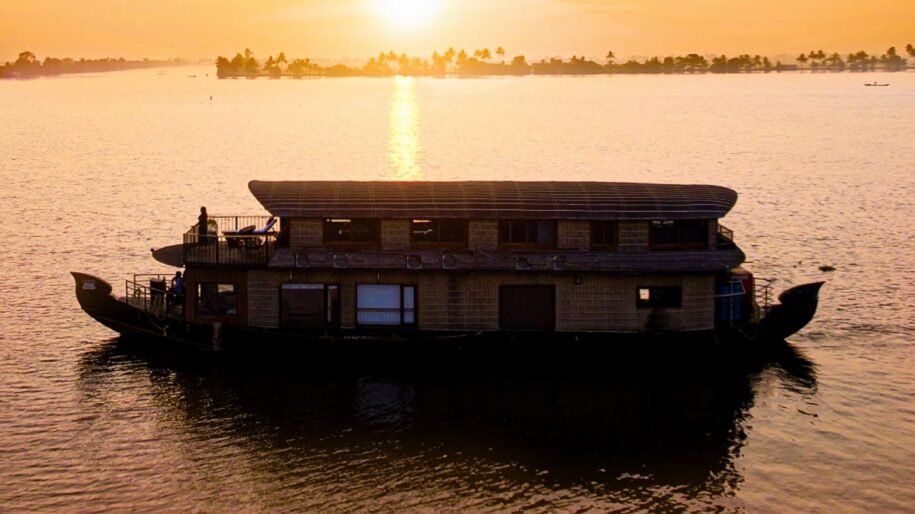
There’s something about those houseboat photos that makes the decision seem obvious. Traditional kettuvallam gliding across glassy water, palm fronds reflected below, the whole scene drenched in amber evening light. Then reality hits when you start comparing prices and realise one operator wants ₹8,000 while another is quoting ₹75,000. Both claim to offer “authentic Kerala backwater experiences.”
So what exactly separates them?
The pricing spread isn’t random, and it’s not just about fancy amenities or bigger rooms. The difference runs deeper—affecting where your boat actually goes, the quality of what you eat, whether you’re sharing the experience with strangers, and ultimately whether you’ll spend your time genuinely unwinding or just tolerating discomfort between photo opportunities.
Here’s what actually changes at each price tier.
The ₹6,000-₹15,000 Range
Start here: you get a cabin with a bed and fan, three meals daily, a crew to navigate, and access to the backwaters. That’s the baseline.
Missing from this picture: air conditioning, privacy, and substantial comfort. Bathrooms are bare-bones functional. Meals fill you up—rice, sambar, basic curries, maybe fish—without being particularly memorable. Your route follows the busy main canals near Alappuzha, where boat traffic stacks up during peak months.
Here’s what catches most people unprepared: budget houseboats usually book multiple groups together. You could end up cruising with a family reunion, honeymooners, or backpackers—might be wonderful company, might be people whose vacation rhythm clashes entirely with yours. The deck, dining table, and lounge get shared. Your cabin becomes your only private territory, which presents a problem in Kerala’s sticky heat when you’re trying to cool off with just a ceiling fan.
Those main waterways near town turn into busy channels during October through March. Dozens of houseboats navigate the same routes. Villages along these popular stretches have naturally adapted to constant tourism—children wave enthusiastically, vendors paddle up selling souvenirs and cold drinks. It’s not manufactured exactly, but it’s definitely shaped by years of tourist traffic rather than representing everyday backwater life.
Does this tier work? Sometimes. Day cruises make sense here since you’re only aboard 4-6 hours and won’t be sleeping. Travelers on genuinely tight budgets who prioritize seeing the backwaters over comfort level. Young backpackers who view basic conditions as part of the adventure.
Just understand you’re getting “I visited the backwaters” rather than “I relaxed in the backwaters.”
Moving to ₹15,000-₹30,000
Air conditioning appears in this bracket, which solves the sleep problem immediately. Boats show better maintenance. Bathrooms cross into “decent” territory. Food preparation improves—you’re eating freshly cooked meals instead of reheated bulk curry. Some operators here offer exclusive bookings.
The complication: “mid-range” varies wildly depending on the operator. Some deliver genuine value with comfortable boats, attentive service, and good food. Others just added AC units to budget boats and raised prices accordingly.
Research becomes critical here. Read recent reviews carefully, especially mentions of cleanliness, food quality, and whether “exclusive booking” actually meant exclusive. Ask operators directly: “Are we sharing this boat?” “Where do you anchor overnight?” “Can I see the actual boat we’d be on?” Their answers—and how they answer—reveal a lot.
When mid-range works properly, it hits a comfortable middle zone: good enough that discomfort doesn’t dominate your experience, without luxury pricing. When it fails, you’ve paid extra for minimal improvement over budget options.
₹30,000-₹90,000+ Territory
The shift here goes beyond incremental improvement. The fundamental experience changes.
Location matters first. Premium operators typically base themselves well outside the Alappuzha tourist zone—sometimes 10-15 kilometers into quieter backwater sections. Canals narrow. Boat traffic essentially disappears. You’re observing village life as it actually unfolds, not as it performs for passing tourists. Real fishing activity, more bird species, something closer to what these waterways looked like before tourism infrastructure arrived.
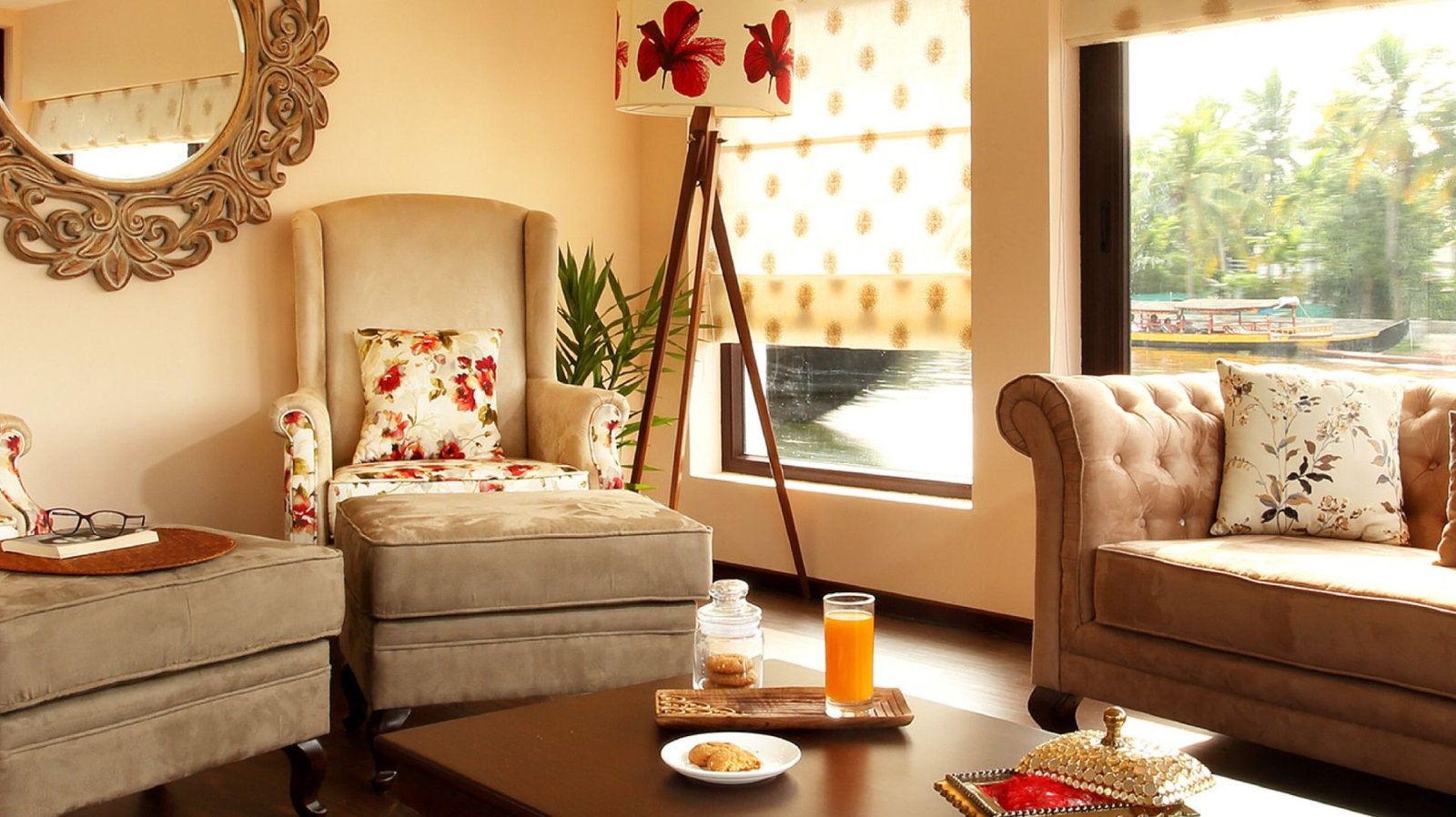
The boats balance tradition and comfort without compromising either. Thatched roofs and wooden construction maintain Kerala’s architectural character externally. Step inside and you find modern bathrooms with proper toiletries, genuinely comfortable beds, lighting designed for ambiance rather than just visibility. Nothing requires you to adjust your expectations or make excuses—it’s simply well executed.
Complete privacy. The entire vessel is yours. Wake when you naturally wake up. Sit on deck in whatever you find comfortable. Speak at normal volume without wondering about other guests. Set your own rhythm without coordinating with strangers.
The food deserves particular attention since it consistently emerges as a highlight in guest accounts. Luxury houseboats approach dining as a central attraction rather than logistical necessity. Chefs understand Kerala cuisine properly—not generic Indian restaurant food adapted for tourists, but actual regional cooking with correct techniques and balanced spicing.
Sourcing shifts noticeably. You might watch a fisherman’s canoe pull alongside, see the crew purchase fresh karimeen or prawns, then eat that same fish hours later prepared with coconut, curry leaves, and spice combinations that require real culinary skill. Vegetables come from local farms, sometimes the operator’s own land.
Breakfast offers genuine choice: appam with stew, idiyappam with kadala curry, dosa with various chutneys, plus continental staples like eggs and toast. Lunch arrives on banana leaves—rice, sambar, multiple vegetable preparations, fish curry, pickles, papadum—each element distinct and properly seasoned. Dinner showcases regional specialties prepared authentically, not simplified for cautious foreign palates.
Worth double or triple the budget price? Depends entirely on what brought you to Kerala and what you’ll remember afterward.
Questions That Matter
Can you sleep in tropical heat with only fan cooling?
Answer honestly, not optimistically. Kerala stays hot and humid even during winter. If you need climate control for decent sleep, budget boats leave you exhausted and irritable. Scenic beauty doesn’t compensate for consecutive nights of poor rest.
How do you handle shared vacation spaces?
Some travelers enjoy the social element and meeting people. Others find it intrusive even with pleasant fellow guests. If you’re celebrating something romantic or genuinely value solitude, shared boats will bother you more than anticipated.
What kind of trip is this?
Regular vacation where the houseboat represents one component of a broader India journey? Luxury pricing might feel excessive. Honeymoon, significant anniversary, or genuinely once-in-a-decade trip? Memory quality likely justifies the cost.
How long aboard?
Day cruise ending by evening? Budget probably suffices since you avoid sleeping and extended-time comfort issues. Overnight or multiple days? Every additional hour amplifies comfort’s importance.
What sticks in memory years later?
Not the precise amount paid. Definitely how well you slept, food quality, whether you felt relaxed or just uncomfortable between photos, and whether the experience delivered what you hoped Kerala would offer.
Timing’s Impact
Off-season dramatically restructures the financial equation.
Kerala’s monsoon runs June through September, with shoulder periods in April-May and October. Tourist numbers drop sharply. Luxury operators often reduce rates 30-40% while maintaining identical service standards. That ₹64,000 December houseboat might cost ₹40,000 in July. Same boat, same crew, same chef, same peaceful routes.
Monsoon has distinct appeal. Rain patterns on water create different beauty. Everything turns intensely green. Tourist presence drops to a fraction of peak levels. Temperatures moderate slightly. It’s not inferior conditions—just different conditions that many travelers prefer. You need comfort with intermittent rain and clouds instead of guaranteed sunshine.
Schedule flexibility makes luxury surprisingly affordable while delivering emptier, more peaceful backwaters.
Smart Middle-Ground Strategies
Consider the smallest luxury boat rather than a larger budget one. Premium one-bedroom vessels often cost less than basic three-bedroom boats. For couples, this frequently hits the ideal balance—genuine luxury at manageable pricing.
Research mid-range operators thoroughly. Quality ones deliver real value: exclusive bookings, good food, attentive service. Multiple recent reviews usually reveal the truth about cleanliness, food, actual privacy, and how routes compare to promises.
Ask specific questions before booking. “Will others share this boat?” “Where exactly do you anchor overnight?” “Can you send photos of our actual boat, not marketing shots?” “What does your chef prepare fresh daily versus reheat?” Reputable operators answer clearly and specifically. Vague responses signal problems.
Think about mixing approaches. Try a budget day cruise to test if houseboats appeal, then book luxury overnight if you want more. Or if budget is genuinely all you can manage, stick with day trips where comfort and privacy limitations matter less than overnight.
About Spice Routes
Spice Routes Luxury Cruises started in 2008. That longevity means something in a market where operators frequently launch and disappear. Sixteen years suggests they’ve figured out consistent delivery.
They operate six houseboats, one to five bedrooms. Every booking is exclusive—never shared with other parties. Exteriors maintain traditional Kerala design, particularly those distinctive thatched roofs. Interiors are thoroughly modern and comfortable—proper bathrooms, quality linens and toiletries, thoughtful design.
Check-in occurs at a 200-year-old heritage home surrounded by farmland, roughly 10 kilometers outside town. You drive through actual Kerala countryside—working paddy fields, village churches, traditional homes—before boarding. This immediately establishes their priority: showing authentic Kerala rather than maximizing tourist volume.
Food quality appears repeatedly in guest reviews. Chefs source ingredients locally in meaningful ways—fish from fishermen who paddle up, vegetables from nearby farms or their own land. They prepare traditional Kerala dishes using proper regional techniques and appropriate spicing, not watered-down tourist versions.
The three managing partners all grew up around Alleppey and remain actively involved in operations. Local knowledge combined with professional hospitality standards creates something both authentically rooted in place and executed to international expectations.
Your Decision
Kerala’s backwaters are genuinely remarkable—an actual unique ecosystem and cultural landscape existing in few places. How you experience it shapes what you remember and take away.
Budget houseboats show you the backwaters. You’ll see scenery, take photos, technically be there. For certain trips and budgets, this accomplishes the goal.
Luxury houseboats let you properly inhabit the experience rather than just observe it. You’re resting in it, eating food sourced from it, moving slowly enough to register small details. Over 24-48 hours on water, the gap between these approaches becomes quite stark.
Neither is inherently right or wrong. But treating them as equivalent experiences at different prices really undersells how much quality differences matter when you’re living through it.
Choose based on honest assessment of what you value, what your budget realistically allows, and what you’ll wish you’d done while scrolling photos months later. The backwaters will be beautiful regardless. Whether you’re genuinely comfortable and relaxed experiencing that beauty—that’s what the price difference buys.
Explore Spice Routes at spiceroutes.in/kerela-houseboats