
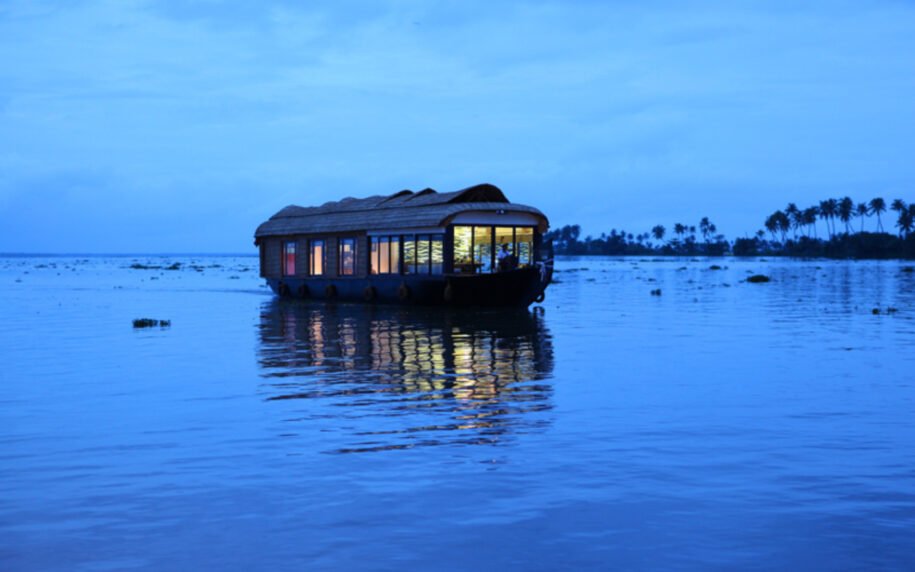
You’ve settled on a Kerala houseboat cruise—good call. Now comes another decision that matters more than it might initially seem: shared or private booking?
On the surface, this looks like a straightforward money question. Shared houseboats cost less, sometimes substantially less. Private bookings cost more but you get exclusive use. Simple trade-off, right?
Not really. The difference between shared and private goes far deeper than pricing. It fundamentally alters what kind of experience you’ll have out there. Unlike a hotel where “shared” just means common lounges or breakfast areas, on a houseboat you’re sharing quite confined spaces with people you don’t know for 20+ hours straight.
Here’s what actually changes between these two options, because this choice will define your entire backwater experience.
Understanding What “Shared” Really Involves
Shared houseboats book multiple parties—typically 2-4 different groups or solo travelers—onto one vessel. You get your own sleeping cabin, but everything else becomes communal territory shared with strangers.
Dining area? Shared. The deck where you’d presumably spend most of your time watching scenery? Shared. Lounge space? Shared. This means your schedule, your noise level, your ability to just exist comfortably—all now involve coordinating or compromising with people you just met.
Some travelers don’t mind this at all. They’re naturally social, enjoy meeting people, find the communal aspect adds something positive. That’s legitimate, and if you genuinely fit this description, shared houseboats might work fine for you.
But be honest with yourself here. Are you actually that type of person, or are you just rationalizing the lower cost? Most people booking Kerala houseboats are seeking peace, privacy, and distance from crowded environments. Shared bookings directly contradict those goals.
Routes Get Restricted
Here’s something operators don’t emphasize in their marketing: shared houseboats usually follow shorter, more limited routes.
The logic makes sense from their perspective. When coordinating multiple parties with different expectations and preferences, sticking to the busiest, most straightforward waterways is simply easier. These are the main canals near Alappuzha town where dozens of other boats operate. Efficient for the operator, limiting for your experience.
Private bookings allow much more flexibility. Operators can venture into quieter sections, navigate narrower canals where village life happens more organically, anchor in secluded spots overnight. Routes become longer and more varied because they’re tailoring to one party’s interests rather than trying to keep multiple groups satisfied.
This distinction might seem minor until you’re actually floating along surrounded by other tourist boats, viewing the same villages everyone else sees, following the exact route dozens of boats took that day. The backwaters are extensive and diverse, but shared houseboats show you a narrow, heavily trafficked slice.
Common Areas Become Awkward Territory
Let’s get into the practical reality of sharing spaces with strangers for extended periods.
You wake up wanting morning coffee on the deck at sunrise. Someone else is already there having an animated phone conversation. You wait. By the time they finish, the best light has passed.
Afternoon comes and you want to read quietly in the lounge. Another family’s kids are playing there—completely reasonable, they’re children—but your quiet reading plan just dissolved.
Evening arrives and you’d like drinks on the deck watching the sunset. Except now you’re making polite conversation with the other guests because ignoring people sitting two feet away feels uncomfortable, even though peaceful observation was actually what you wanted.
Meals get particularly strange. You’re sitting at one table with people you don’t know, making conversation because silence feels weird, but you don’t have much connection beyond coincidentally booking the same boat. Some people enjoy this social dynamic. Most find it somewhere between mildly uncomfortable and genuinely exhausting.
Privacy extends to conversations too. Want to discuss something personal with your travel companion—your relationship, future plans, thoughts about the trip? You’re now editing what you say and how you say it because strangers can hear everything. Seems like a small concern, but it fundamentally shifts the intimacy of the experience.
Cruise Duration Gets Cut
Shared houseboats typically run on tighter, shorter schedules. Coordinating pickup and drop-off for multiple parties with different needs gets complicated, so the solution is standardized, abbreviated routes.
Where private bookings might give you 22-24 hours on water with flexible timing, shared bookings often compress this to just 14-16 hours on fixed schedules. Check-in at specific times. Departure is set. Meals happen at designated times. Less flexibility for “let’s stay here longer” or “can we sleep in and leave later?”
This compression means significantly less actual time on the backwaters, which is presumably what you’re paying for. When you calculate cost per hour of actual experience, the value proposition shifts considerably.
And here’s the reality of shared accommodations: one room might have a family with young children trying to maintain bedtime routines, while the next room could be occupied by a bachelor who’s come to enjoy loud music or unwind over drinks late into the night. The houseboat crew can’t control guest behaviour beyond a point, and what’s a vacation for one person becomes a disruption for another. The thin walls that work perfectly fine in a private booking become a real issue when strangers with completely different vacation styles are separated by just a few feet of wood.
Food Quality Drops
Here’s an uncomfortable reality: food quality on shared houseboats typically falls below private bookings, and it’s not accidental.
When chefs cook for multiple groups with varying dietary preferences, restrictions, and expectations, the practical approach is standardized, middle-ground preparations. Dishes that won’t upset anyone but won’t particularly excite anyone either. Safe, mild, often reheatable options rather than fresh regional specialties.
Private bookings let chefs cook specifically for your party. They can inquire about preferences beforehand, properly accommodate dietary requirements, prepare dishes fresh rather than in bulk. If you eat non-vegetarian, they can purchase fresh fish from passing fishermen and cook it for you specifically. On shared boats, this level of customization becomes logistically impossible.
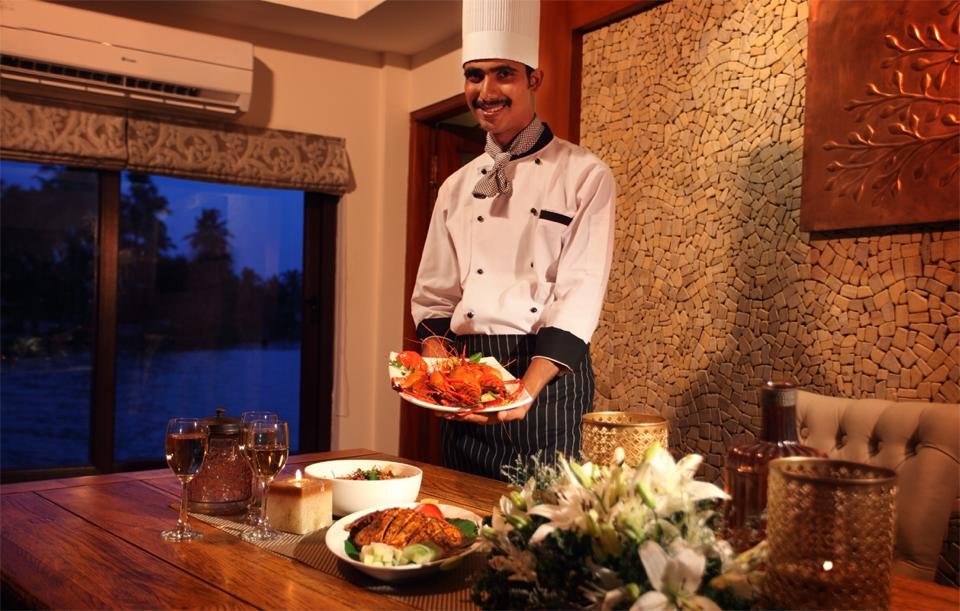
The difference becomes obvious during meals. Shared boat food leans toward generic “tourist curry” preparations—edible and filling, rarely memorable. Private boat food can be genuinely excellent when operators prioritize quality—fresh ingredients, proper regional preparation, dishes cooked with actual attention.
Safety and Accountability Get Complicated
This aspect gets overlooked until problems emerge: safety and accountability become messier with shared bookings.
When issues arise—injury, missing belongings, conflicts between guests—establishing responsibility and finding resolution gets complicated. Multiple parties means multiple versions of events, divided crew attention, often no clear dispute resolution process.
Private bookings create clearer accountability. Crew attention focuses on one party. If problems occur, there’s no confusion about who was involved or what happened. Resolution is simpler without mediating between different groups with conflicting interests.
There’s also the straightforward safety consideration of strangers in confined spaces. Most people are fine, but occasionally you encounter someone drinking too much, behaving inappropriately, or creating uncomfortable situations. On a boat in the middle of backwaters, you can’t simply leave or relocate to another area. You’re managing whatever situation develops.
Why Spice Routes Avoids Shared Bookings
Spice Routes made a clear decision from the start: no shared bookings, period. Every houseboat operates exclusively for whoever books it—solo traveler, couple, or large group.
This isn’t marketing positioning. It’s a core commitment to delivering the experience the backwaters genuinely deserve.
When you book with Spice Routes, the entire boat is yours. Deck, dining area, lounge—all private. The chef cooks for your party specifically. Routes can adjust based on your interests and schedule. Crew attention focuses entirely on your experience rather than splitting among multiple groups with competing priorities.
This exclusive approach costs more initially, obviously. But it delivers what most visitors actually came to Kerala seeking: peace, privacy, authentic connection with landscape and culture, experiencing the backwaters on your terms and timeline.
Their six boats—one to five bedrooms—all operate this way. Whether booking the smallest single-bedroom or largest five-bedroom vessel, you receive complete exclusivity. No strangers in your space, no route compromises, no awkward shared meals.
The check-in process reflects this philosophy. Rather than typical dock boarding where multiple groups arrive simultaneously, you check in at their 200-year-old heritage home surrounded by farmland. This immediately establishes the tone—this is your experience, not a group tour.
When Shared Might Actually Work
Being fair, specific situations exist where shared houseboats could make sense.
Solo travelers who genuinely want social interaction and feel odd about booking an entire boat alone might prefer shared arrangements. The social element becomes an advantage rather than a drawback.
Extremely budget-constrained travelers for whom the price gap is truly prohibitive might prioritize access over experience quality. Seeing the backwaters in compromised form might beat not going at all.
Very brief day cruises—4-6 hours—where you’re not sleeping aboard and time is limited anyway might function as shared experiences. The limitations matter less when you’re only there briefly.
But for most travelers planning overnight or multi-day cruises, seeking relaxation and cultural immersion, celebrating something meaningful, or traveling as couples or families—shared bookings undermine what you’re actually trying to accomplish.
The Real Math
Here’s the calculation that actually matters: don’t just compare initial prices. Consider what you’re genuinely receiving.
Shared houseboat: Lower price, but shorter duration, restricted routes, shared spaces, compromised food, less flexibility, more coordination hassle. Cost per hour of quality experience is higher than it first appears.
Private houseboat: Higher initial price, but longer duration, better routes, complete privacy, better food, full flexibility, personalized attention. Cost per hour of quality experience often becomes comparable or better.
The “budget” option frequently isn’t actually budget when accounting for what you receive. You pay less but get substantially less, to the point where the value equation doesn’t necessarily favor the cheaper choice.
There’s also opportunity cost. Most people visit Kerala once, maybe twice ever. Backwaters are a significant part of that trip. Choosing shared bookings to save money potentially compromises your single chance to experience this properly. That’s worth serious consideration.
Making Your Choice
If you’re still weighing shared versus private, ask yourself honestly:
Do you actually enjoy sharing vacation spaces with strangers, or are you rationalizing the lower cost?
Will you be comfortable having personal conversations with your travel companion when strangers are present?
Are standardized routes and schedules acceptable, or were you hoping for something more personalized?
Does food quality matter to you, or is it just sustenance?
How important is genuine relaxation and privacy compared to social interaction?
Is this a once-in-a-lifetime trip or something you do regularly?
Your honest answers should guide this decision more than price difference alone.
For most travelers seeking what Kerala’s backwaters actually offer—peace, beauty, cultural connection, genuine rest—private bookings deliver the experience you imagine when picturing yourself on those waters. Shared bookings deliver something quite different: a more crowded, compromised, logistically complex version that saves money but sacrifices much of what makes the experience worthwhile.
Choose based on what you actually want from your Kerala adventure, not just what costs less initially. The backwaters deserve more than a compromised experience, and so do you.
Experience Kerala’s backwaters with complete privacy at spiceroutes.in/kerela-houseboats