
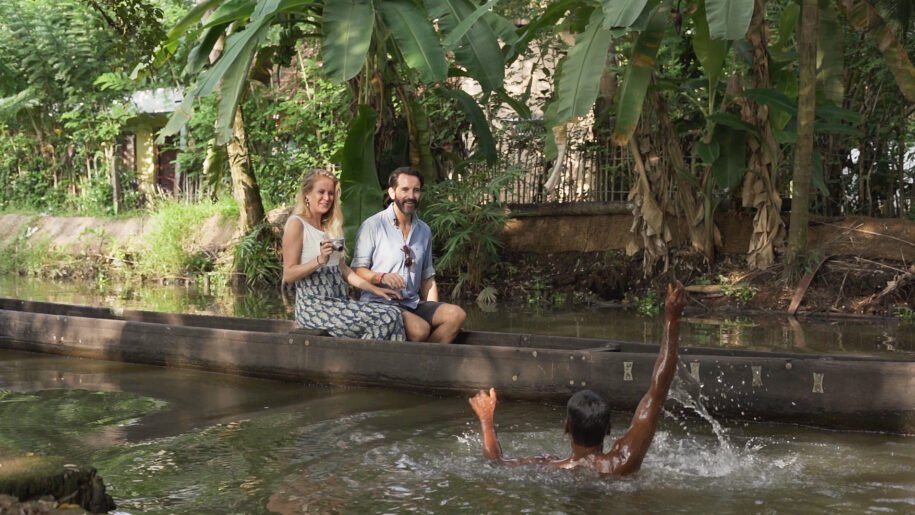
People come back from backwater trips talking about how calm they felt. How thoughts slowed down. How stress that seemed permanent just lifted. This isn’t placebo effect or vacation glow talking. Something specific happens when you spend time on slow moving water.
The research on this is solid. Water affects the brain in measurable ways. The backwaters just happen to deliver the right combination of elements.
What Water Does to Brain Activity
Studies using fMRI scans show the brain responding to water in distinct patterns. Areas associated with stress and anxiety quiet down. Regions linked to calm and creativity become more active. This happens even when people just look at water, but the effect strengthens when they’re actually on it.
The reasons connect to how human brains evolved. We’re wired to find water calming because for most of human history, water meant survival. Finding water meant safety, rest, food sources. The brain still responds to that ancient programming.
Houseboats on Kerala’s backwaters provide extended exposure to this effect. You’re not just near water for a few minutes. You’re on it for hours or days. The cumulative impact adds up.
The Rhythm Factor
The backwaters move, but slowly. Current flows. The boat drifts. Everything has gentle motion but nothing sudden or jarring.
Research on rhythm and the brain shows predictable, gentle patterns induce calm states. Heart rate variability decreases. Breathing deepens. Cortisol levels drop. This is the same mechanism behind why rocking chairs work, why babies sleep better when held and swayed, why train travel can feel soothing.
On luxury houseboats operated by companies like Spice Routes, the movement stays consistent. The boat doesn’t fight water or make sudden changes. It moves with the canal’s natural flow. Your nervous system picks up on this steady rhythm and begins matching it.
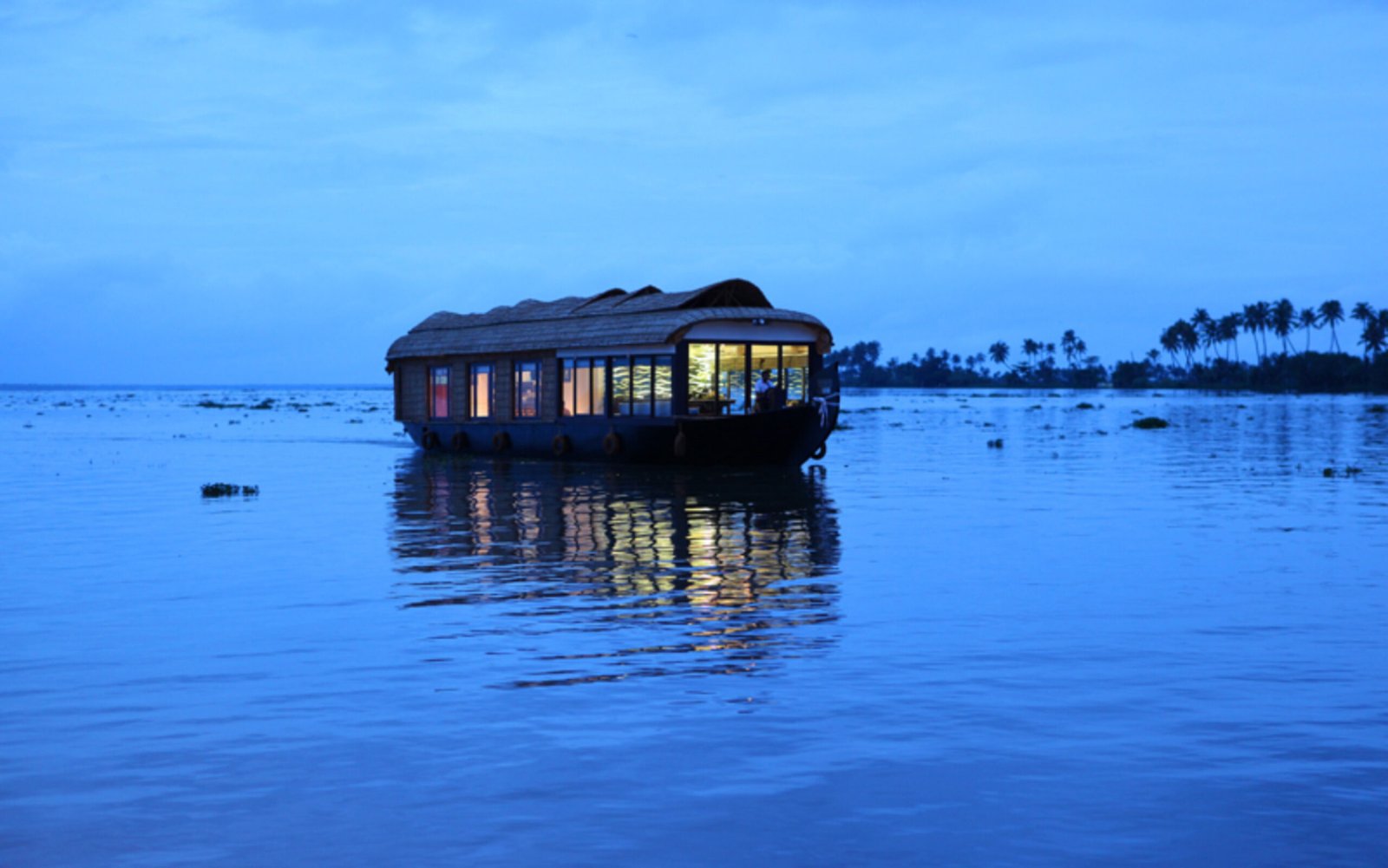
The effect compounds at night. Sleeping on water means your body experiences continuous gentle motion. Some people report sleeping better on houseboats than they have in months. The rocking motion, mild but constant, seems to access something in how human nervous systems regulate rest.
Sound Patterns on the Water
Cities produce irregular, unpredictable noise. Traffic, construction, people, sirens, each sound different from the last. The brain has to constantly process and categorize these sounds, which creates low level stress even when you’re not conscious of it.
Water sounds are different. Lapping against the boat hull. Dripping from the paddle. Birds calling from the banks. These sounds have patterns. The brain recognizes the repetition and stops treating them as potential threats requiring attention.
The backwaters add another layer. Village sounds carry across water but arrive muted, slightly distorted. A child calling to another. Someone washing dishes. A dog barking. These human sounds confirm you’re in an inhabited landscape, which the brain reads as safe, but they’re distant enough not to require response.
Studies on natural soundscapes show they lower heart rate and reduce stress hormone production. Water sounds rank particularly high in this effect. Backwater cruises provide hours of this acoustic environment without interruption.
Visual Simplicity
The backwaters don’t assault your eyes with information. Palms. Water. Sky. Rice paddies. Villages. The color palette stays relatively consistent. Green, blue, brown, occasional bright fabric from clothes drying.
Compare this to what your visual system processes in normal life. Screens, advertisements, traffic, crowds, changing environments. Each visual element requires processing. The accumulated demand exhausts cognitive resources.
Research in environmental psychology shows natural, visually simple environments allow what’s called “soft fascination.” Your attention engages but doesn’t strain. You can look at water flowing or palms swaying without effort. This gives your prefrontal cortex, which handles executive function and decision making, time to recover from constant demand.
Houseboats moving through the backwaters keep the visual field changing but slowly. New stretches of canal. Different villages. Varying vegetation. Your eyes have something to watch, which prevents boredom, but nothing requires analysis or quick response.
The Horizon Effect
Being on water gives you access to the horizon. In cities, buildings block distant views. Even in nature, trees or hills often limit how far you can see.
Open horizons trigger specific responses in the brain. The eye naturally focuses on distant points when given the option. This shifts brain activity away from detail oriented processing toward broader, more relaxed awareness.
The backwaters provide multiple horizons. Where water meets sky. Where canal meets land. Where rice paddies extend. Your gaze can rest on these distant lines without obstruction.
Some research suggests this contributes to creative thinking. When your visual system isn’t locked on near objects requiring detailed focus, the brain seems to make different kinds of connections. People report insights or solutions to problems arriving during water time that hadn’t come during normal focused work.
Digital Disconnection
Many backwater areas have spotty mobile coverage. WiFi doesn’t exist on most boats. This isn’t a designed wellness feature. It’s just geography and infrastructure reality.
The forced disconnection removes something brains have started treating as baseline anxiety. The possibility of messages arriving. Work emails requiring response. Social media updates creating comparison stress. News cycles demanding attention.
Studies on digital detox consistently show decreased anxiety and improved mood within 24 hours of disconnection. The backwaters create conditions where disconnection happens naturally rather than through willpower.
On a luxury houseboat with Spice Routes, you’re not fighting the urge to check devices because there’s no point. Service doesn’t work. The habit loop breaks not through discipline but through environmental reality.
Movement Without Effort
Walking requires energy. Driving requires attention. Flying creates stress even when you’re sitting still. Most travel involves some level of physical or mental demand.
Backwater cruising removes this. You’re moving through landscape without contributing any effort. The boat handles it. You sit, stand, walk around the deck, but none of this propels you forward. The landscape changes but you’re not working to change it.
Research on passive movement, like being driven through scenery versus driving yourself, shows lower stress responses. The brain doesn’t have to monitor for threats or navigate obstacles. It can simply observe.
This creates a particular kind of rest. You’re experiencing new things, which keeps the mind engaged, but you’re not expending energy to make the experience happen. The combination seems to refresh people in ways that both pure rest and active travel don’t quite achieve.
Temperature and Humidity
Kerala’s backwater climate is specific. Humid, yes, but not oppressively so. Warm but not extreme. When you’re on the water, evaporative cooling makes it more comfortable than being on land.
Climate affects mood through multiple pathways. Comfortable temperature means your nervous system isn’t managing heat stress. Humidity at moderate levels helps respiratory function. The combination creates physical comfort, which underlies psychological ease.
Houseboats with proper air conditioning offer options. Too warm outside? Go inside. Want fresh air? Sit on deck. The ability to modulate your environment according to preference keeps comfort steady.
Social or Solitary: Both Work
Some people book houseboats for group time. Family, friends, corporate teams. The setting encourages conversation differently than normal environments. Fewer distractions. Shared unusual experience. Natural conversation breaks when people want quiet.
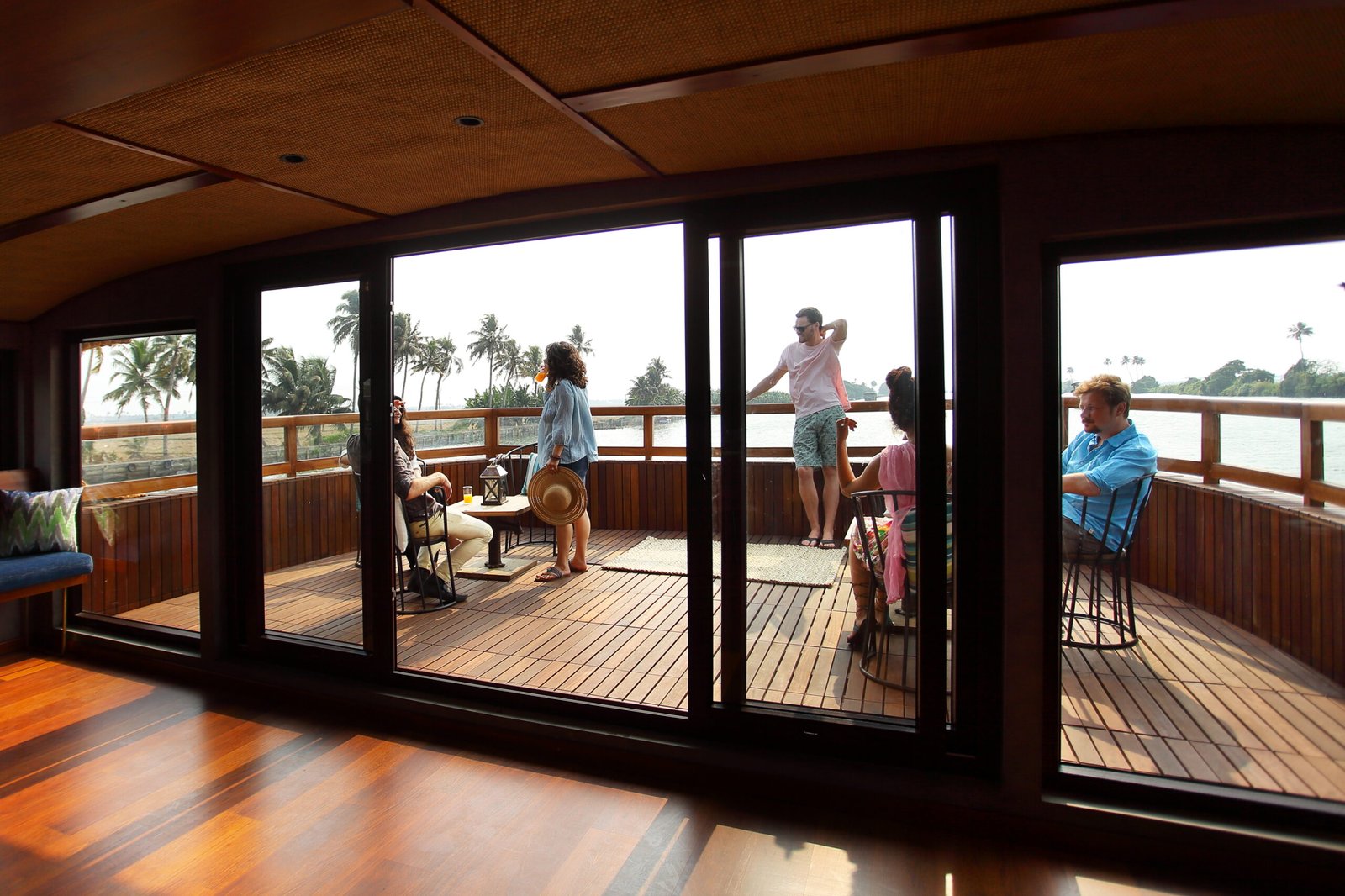
Others book for solitude or couple time. The backwaters accommodate this equally well. Silence on water doesn’t feel empty or uncomfortable the way silence in normal environments sometimes does. The water and landscape provide enough ambient interest that being quiet doesn’t create social awkwardness or personal restlessness.
Research on restorative environments shows both social connection and chosen solitude contribute to stress recovery, but the environment has to support whichever mode you’re in. The backwaters seem to work for both, which is unusual.
Why This Matters Beyond Vacation
The calm people report from backwater time doesn’t necessarily disappear the moment they return to regular life. Effects seem to linger.
Some of this connects to what psychology calls “reference experiences.” Your brain now has a clear memory of what deep calm feels like. That memory becomes accessible. When stressed, some part of your mind can recall backwater time and that physiological state, which can slightly reduce current stress.
There’s also evidence that genuine rest, the kind that actually lets your nervous system reset rather than just stopping activities, creates lasting changes in stress response patterns. A few days of real restoration can shift how you handle following weeks.
People talk about returning to work with better perspective. Problems that seemed overwhelming before the trip feel more manageable after. This probably isn’t the backwaters magically solving anything. More likely, the rest allowed their brains to process things that couldn’t get processed under constant demand.
The Honest Limits
The backwaters aren’t therapy. They won’t fix serious mental health conditions. Anxiety disorders, depression, trauma responses need actual treatment.
The calm also doesn’t last indefinitely. You return to demanding work, difficult relationships, challenging circumstances. The backwater peace fades under regular life pressure. This is normal.
What the backwaters offer is genuine rest in an environment specifically constructed to support it. Water, rhythm, sound, visual simplicity, movement, disconnection, all operating together. For the time you’re there, your nervous system gets a break it probably needs.
Some people find this changes their baseline slightly. They sleep better for weeks after. Stress doesn’t spike as sharply. Small annoyances don’t escalate as quickly. Others find the effects fade within days. Individual variation exists.
How to Maximize the Effect
Based on the research and what actually helps people:
Choose adequate duration. The calming effects accumulate. Day trips provide exposure but not enough time for full nervous system shift. One night gives more. Two nights better still. Match duration to how depleted you actually are.
Actually disconnect. The spotty coverage helps, but actively choose not to check devices even when you can. Let the disconnection be complete rather than partial.
Don’t overschedule. The temptation exists to pack the backwater time with activities, stops, programs. Resist this. The value comes from unstructured time letting your brain do what it needs to do without agenda.
Pay attention to small things. Watch the water. Notice the birds. Observe how light changes. This soft fascination is part of what creates restoration. Mindfulness practice captures some of this, but on the backwaters it happens more naturally.
Eat well, sleep when tired. The boats provide good food through operators like Spice Routes. Eat it without guilt. Sleep when your body signals tiredness rather than fighting to stay on some schedule. Your nervous system is trying to regulate. Help it.
What Actually Happens
Strip away the wellness language and here’s the reality. You spend time on slow moving water. Your brain stops processing constant threats and demands. Stress hormones decrease. Calm neurochemicals increase. Your body gets gentle rhythmic input that it finds soothing. Visual and auditory environment stays simple enough not to exhaust processing capacity.
None of this is mystical. It’s straightforward neuroscience and evolutionary biology. Water feels good because humans evolved around water. Rhythm calms because nervous systems respond to predictable patterns. Simplicity rests because complexity exhausts.
The backwaters combine these elements in unusual concentration. Not by design for wellness purposes, but because that’s what the environment is. Luxury houseboats provide the platform to access this environment comfortably for extended time.
People come back calmer because their nervous systems got what they needed and couldn’t find in normal life. How long that lasts varies. But for the time you’re there, the brain gets genuine rest. That’s not small.
Experience the Backwaters
Book houseboats for stress recovery and genuine rest: spiceroutes.in
Spice Routes operates luxury houseboats on Kerala’s quieter backwater routes.
Leave a Reply