
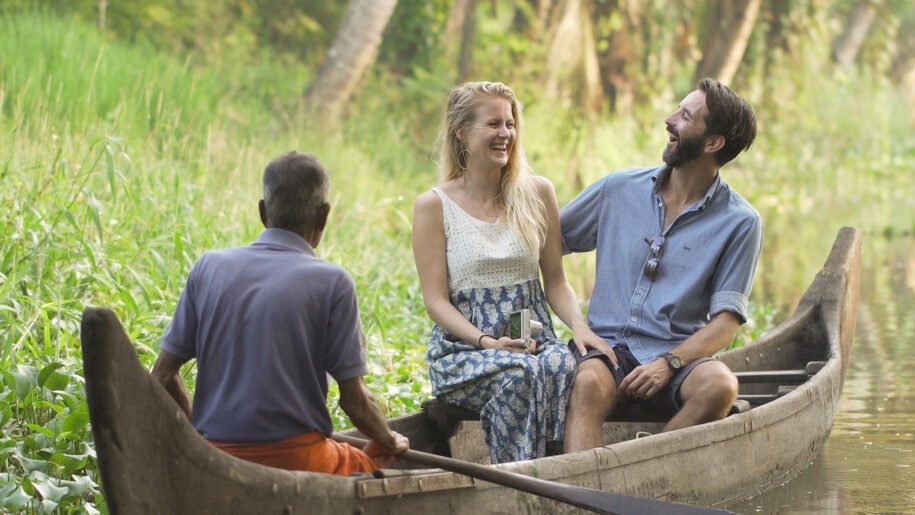
Most boats move too fast. Or they stick to the main canals where scenery is predictable. Either way, you miss what’s actually happening along the banks.
Daily life in the backwaters doesn’t announce itself. It’s quiet, routine, easy to overlook when you’re focused on landscape photography or just relaxing on deck.
But slow the boat down. Take the narrower canals. Actually look at what’s happening on the banks. The backwaters become something different. Not just pretty waterways but home to thousands of people going about their normal days.
Morning Routines Start Early
Before most tourist boats leave the jetty, backwater villages are already active.
Women walk to the water’s edge carrying vessels. They wash dishes from breakfast. Scrub cooking pots. Rinse vegetables. The canal provides running water for households.
Kids in school uniforms wait for small boats that serve as school buses. They gather in groups, bags ready, chatting. The boat arrives, they pile in, it heads off to the nearest school.
Fishermen already finished their early morning work return with catches. Small nets draped over boat sides. Fish sorted into baskets. The catch gets divided, some for home consumption, some to sell.
Cows and goats get let out to graze along the canal banks. You’ll see them wandering, supervised loosely by kids or elderly family members.
Temple routines begin. Bells ring. Some households do morning prayers visible through open doors.
All this happens before 8 AM. Tourist boats usually board around noon. By then, morning life has already cycled through.
Bathing and Washing
The canal serves as bathroom for many households.
Men bathe at the water’s edge. Soap up, rinse off. Morning ritual before heading to work.
Women wash clothes. Soap them, scrub them on rocks or concrete slabs, rinse in the canal water. Then spread them out to dry on bushes, rocks, clotheslines.
The laundry creates visual patterns. Bright saris and lungis drying in sun. Colors against green foliage.
For visitors this can feel intrusive to watch. People bathing and washing clothes are in states of partial undress, conducting private activities in public because that’s how water access works here.
The respectful approach is to see it, understand it as daily necessity, but not stare or photograph people during these moments.
Children and Play
Kids use the canals constantly.
Swimming happens throughout the day. Jumping from banks. Diving from small docks. Teaching younger siblings to swim in shallow areas.
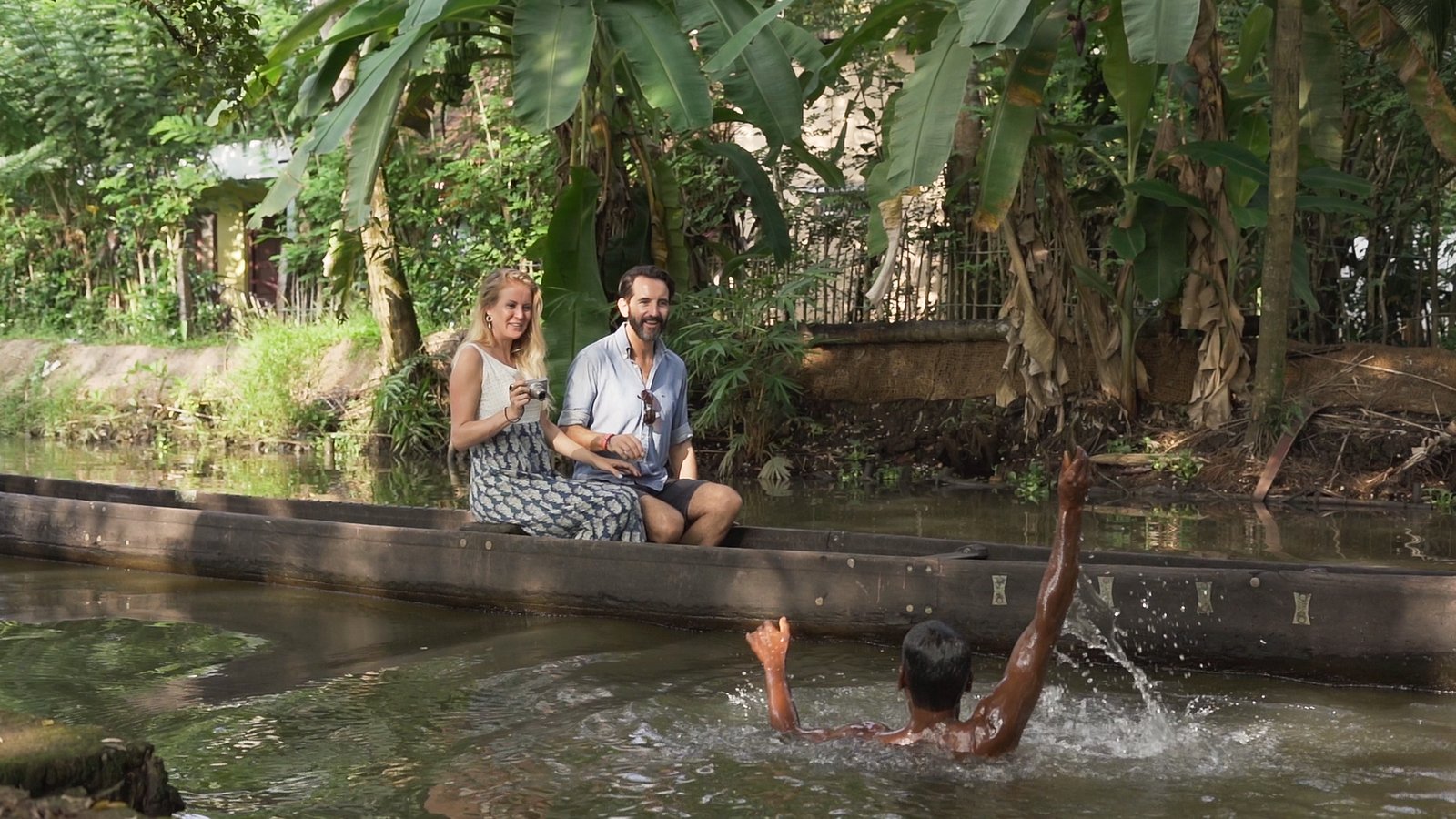
Toy boats made from coconut fronds. Racing them in the current. Small competitions developing among groups of kids.
Fishing with hand lines. Kids learn early. They catch small fish, sometimes enough to contribute to family meals.
Playing along the banks. Games that involve running, hiding, throwing. The canal edge becomes playground.
School finishing means groups of kids in boats heading home. Noisy, energetic, packed into small vessels.
The children’s ease with water is notable. Three-year-olds paddle around confidently. By five or six, they swim well. Water is part of life from the beginning.
Work Patterns Through the Day
Fishing continues in waves. Different techniques at different times.
Cast nets require specific light conditions. You’ll see fishermen standing in shallow water, throwing nets in perfect circles, gathering them back in.
Chinese fishing nets operate on tidal patterns. The large wooden structures with counterweight systems work best during certain water levels.
Prawn catching uses smaller traps left overnight and checked morning. Women often handle this, wading through shallow areas collecting traps.
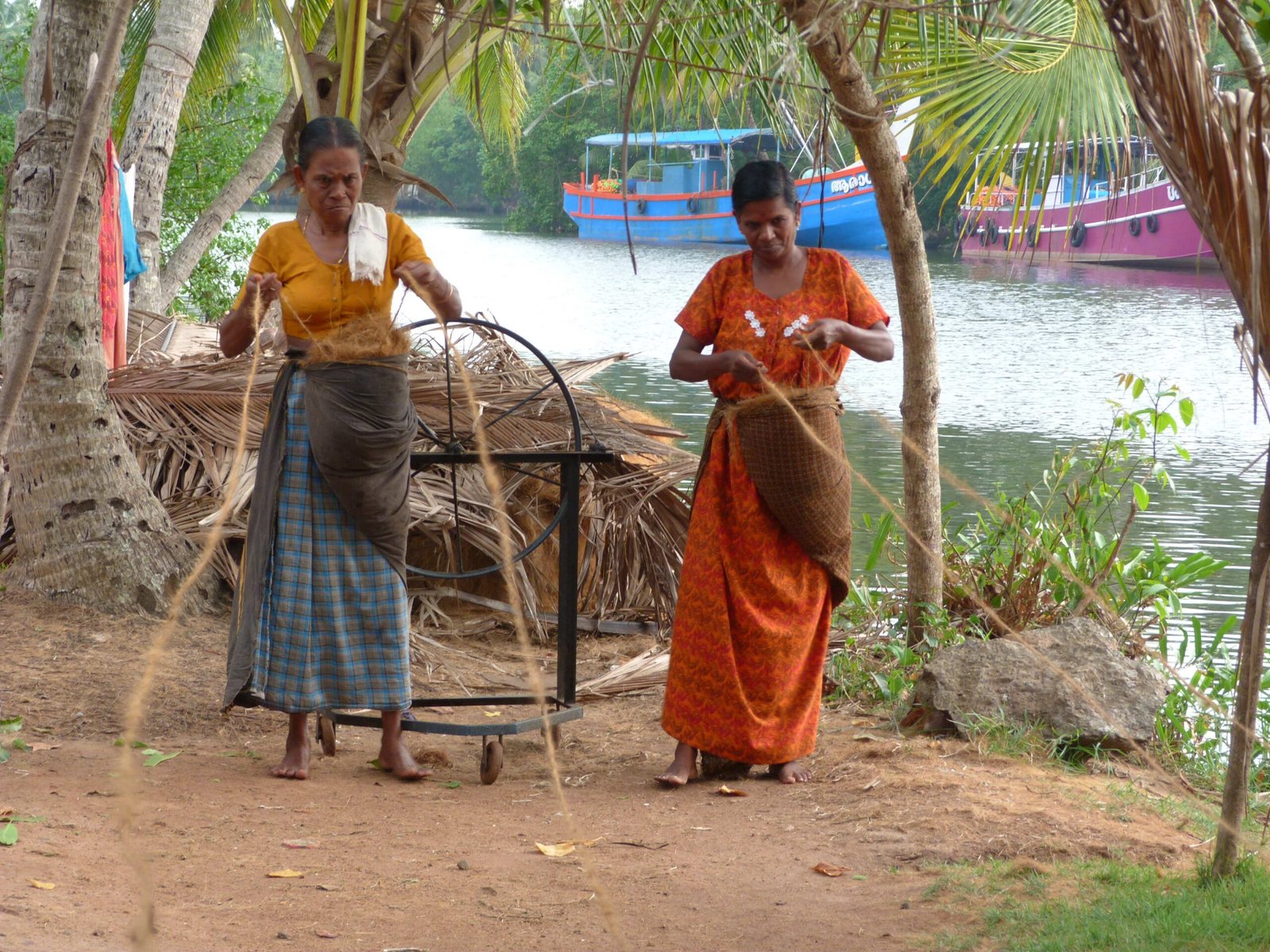
Coir making happens in some villages. Coconut husks get soaked, beaten, spun into rope. Labor-intensive traditional industry.
Toddy tapping occurs twice daily. Morning and evening. Tappers climb palms, collect sap from hanging pots. You can spot them moving between trees if you watch closely.
Rice paddy work varies by season. Planting, weeding, harvesting all require labor. When work is happening, you’ll see groups in the paddies, bent over, moving in lines.
Boat repair and construction happens on the banks. Traditional wooden boats being maintained. Caulking, painting, replacing boards.
Market and Commerce
Small boats serve as mobile shops. Vendors paddle along canals selling vegetables, fish, eggs, household goods. They call out what they have. Houses along the bank respond.
This floating market system connects scattered households to goods without requiring them to travel to a town.
Some vendors are specialists. The fish seller. The vegetable seller. The egg seller. Each has regular routes and customers.
Larger boats transport goods to markets in town. You’ll see them loaded with produce, fish catches, coconut products heading to commercial areas.
The canals function as roads. Watching traffic patterns shows the economic system. What moves when and where.
Domestic Animals
Water buffalo wallow in canals. They need to cool down. You’ll see them standing shoulder-deep, just their heads visible, completely still for hours.
Ducks paddle in groups. Domesticated ducks released to feed during the day, called back at evening.
Chickens wander yards near the water. Scratch at the ground. Provide eggs and occasional meat.
Dogs swim across canals. They move between areas, not particularly bothered by water as obstacles.
Crows, herons, kingfishers hunt along the edges. Not domestic but tied to the ecosystem households depend on.
The animal presence reminds you this is working landscape. Not a park. Not wilderness. Space used by people for livelihood.
Boat Types and Their Purposes
Pay attention to boats and you see the specialization.
Kettuvallams are the traditional rice barges converted to tourist houseboats. Distinctive curved roofs. Large and slow.

Small country boats serve most local transport. Wood, narrow, paddled or poled. Each family might have one or two.
Fishing boats vary by fishing method. Net boats. Line boats. Trap boats. Designed for specific catches.
Ferry boats run fixed routes between villages. Passengers, bicycles, sometimes small goods. Scheduled service locals depend on.
Tiny boats for kids. Learning vessels. One person craft that children use.
The boat diversity shows how central water transport remains. Roads exist but canals are primary routes for many communities.
Seasonal Changes
The backwaters don’t stay static. Season affects what you observe.
Monsoon (June to September) brings heavy rain. Water levels rise. The canals expand. People adjust routines. More happens under cover. Less visible outdoor work.
Post-monsoon (October to November) sees fresh green everywhere. Rice planting happens. Paddy work increases. Lots of labor in fields.
Peak season (December to March) offers best weather. Tourist boats multiply. Local life continues but with more boat traffic interrupting the quiet.
Summer (April to May) brings heat. Water levels drop. Some narrow canals dry up. Fishing changes as fish concentrate in remaining water.
Harvest seasons mean intense activity in paddies. Cutting rice. Bundling it. Threshing. The work is visible and photogenic.
Festival seasons bring temporary changes. Decorations appear. Boat races happen. Music carries across water. Normal routines pause.
Religious Practices
Small shrines dot the banks. Hindu temples. Christian churches. Muslim mosques. The religious diversity Kerala is known for shows along the canals.
Morning and evening prayers happen in homes and temples. Bells, chanting, music at specific times.
Lamps lit at dusk. Small oil lamps placed near shrines or at home entrances. The lights reflect on water.
Processions sometimes pass. Deities being carried to temples. Groups of worshippers singing.
The religious calendar affects daily life. Fasting days change cooking smells. Festival days alter routines.
For visitors, this adds cultural layer. The backwaters aren’t secular space. Religious practice permeates daily existence.
Communication Patterns
Voices carry across water. People shout to each other between houses, across canals.
News travels. Information shared between boats passing. Gossip circulating through the water network.
Mobile phones changed this recently. But the old pattern of water-based communication still operates.
Radio and TV sounds drift from houses. Malayalam news, film songs, cricket commentary during matches.
The soundscape reveals social connection. These aren’t isolated households. They’re networked communities using water as medium.
Elderly and Their Routines
Older people often sit visible from the water. In doorways. Under trees. On verandas.
They watch boat traffic. A form of entertainment and information. Who’s going where. What’s being transported.
Some maintain small gardens near the water. Tending plants. Watering. Harvesting.
Grandparents watch grandchildren. Supervision while younger adults work.
The elderly know canal life deeply. They remember before tourism. Before road access. When boats were the only option.
Their presence in doorways, visible from the water, represents generational continuity. The life they knew continues with modifications.
Construction and Repair
Houses need constant maintenance in humid, water-adjacent conditions.
Roofing work happens regularly. Replacing tiles. Fixing thatch. Adjusting against rain.
Foundation repair where water erodes supports. Reinforcing house posts. Adjusting levels.
New construction occasionally. Cement mixing. Bamboo scaffolding. Materials arriving by boat.
The work is visible from the water. Shows ongoing investment in these locations. People aren’t abandoning backwater life despite modernization pressures.
What Guides Point Out
Good guides know the difference between scenery and activity.
They slow the boat when something’s happening. Point out the woman making coir. Explain the fish trap method being used. Note the specific prayer time at the temple.
They know which activities are common versus special. Help guests understand what’s routine versus unusual.
They can read the landscape. Know which palms are being tapped. Recognize crop stages. Explain seasonal variations.
The guide’s knowledge determines how much you actually see versus just pass by.
Photography Ethics
Daily life along the canals raises photography questions constantly.
People are visible going about private activities. Bathing. Washing clothes. Praying. Eating.
Taking photos without permission feels invasive. But asking every time disrupts the naturalness you’re trying to capture.
The balance requires judgment. Public activities in public spaces are generally fine. Private moments or people in vulnerable situations require asking.
Children should never be photographed without adult permission. This is basic ethics but gets ignored constantly by tourists.
Some activities people don’t mind being photographed. Fishing. Coir work. Boat navigation. Others they do mind. Bathing. Religious practices. Domestic disputes.
When uncertain, don’t photograph. Or ask your guide to ask on your behalf.
Respect matters more than getting the shot.
What You Miss From Fast Boats
Most tourist boats move at speeds designed to cover distance. Show multiple areas in limited time.
At that speed, you see landscape. Palms, water, houses. General scenery.
What you miss: the woman checking crab traps. The kids racing coconut boats. The fisherman mending nets. The temple priest’s morning routine. The mobile vegetable seller’s route. The family having breakfast visible through an open door.
These details require slow movement or stops. Time to observe. Attention to the banks rather than the horizon.
The difference between seeing the backwaters as landscape versus as home to living communities comes down to speed and attention.
Interaction Possibilities
Sometimes opportunities arise for direct interaction.
A fisherman waves. You wave back. He holds up his catch to show you. Brief connection across the water.
Kids call out greetings. “Hello! What is your name?” English learned in school, practiced on tourists.
Someone selling fruit from a boat. Your boat slows. Brief transaction happens. Fresh bananas, mangoes. Money exchanged. Simple commerce.
These moments aren’t arranged. They happen spontaneously if conditions allow. Small boat, slow movement, openness from both sides.
The interactions reveal the backwaters as inhabited by real people who occasionally engage with visitors passing through their neighborhood.
Why This Matters
The backwaters can be experienced as scenic waterways. Beautiful, relaxing, photogenic. This has value.
Or they can be experienced as functioning communities. People’s homes, workplaces, social spaces. This has different value.
The second understanding adds depth to the first. The scenery becomes meaningful when you know it as someone’s daily environment.
Looking closer at daily life creates investment in the place beyond tourism. You understand what backwater communities need. Why water quality matters. Why plastic pollution is serious. Why development should happen carefully.
The slowed-down, attentive approach changes the trip from passive consumption to active engagement.
How Spice Routes Facilitates This
Spice Routes operates their luxury houseboats in ways that support closer observation of daily life.
The routes avoid the most crowded main canals. Narrower waterways mean closer to the banks. More visible detail.
The boats can move slowly when something interesting happens. Speed isn’t the priority. Observation is.
Crew members point things out. Explain what guests are seeing. Provide context for activities that might be confusing otherwise.
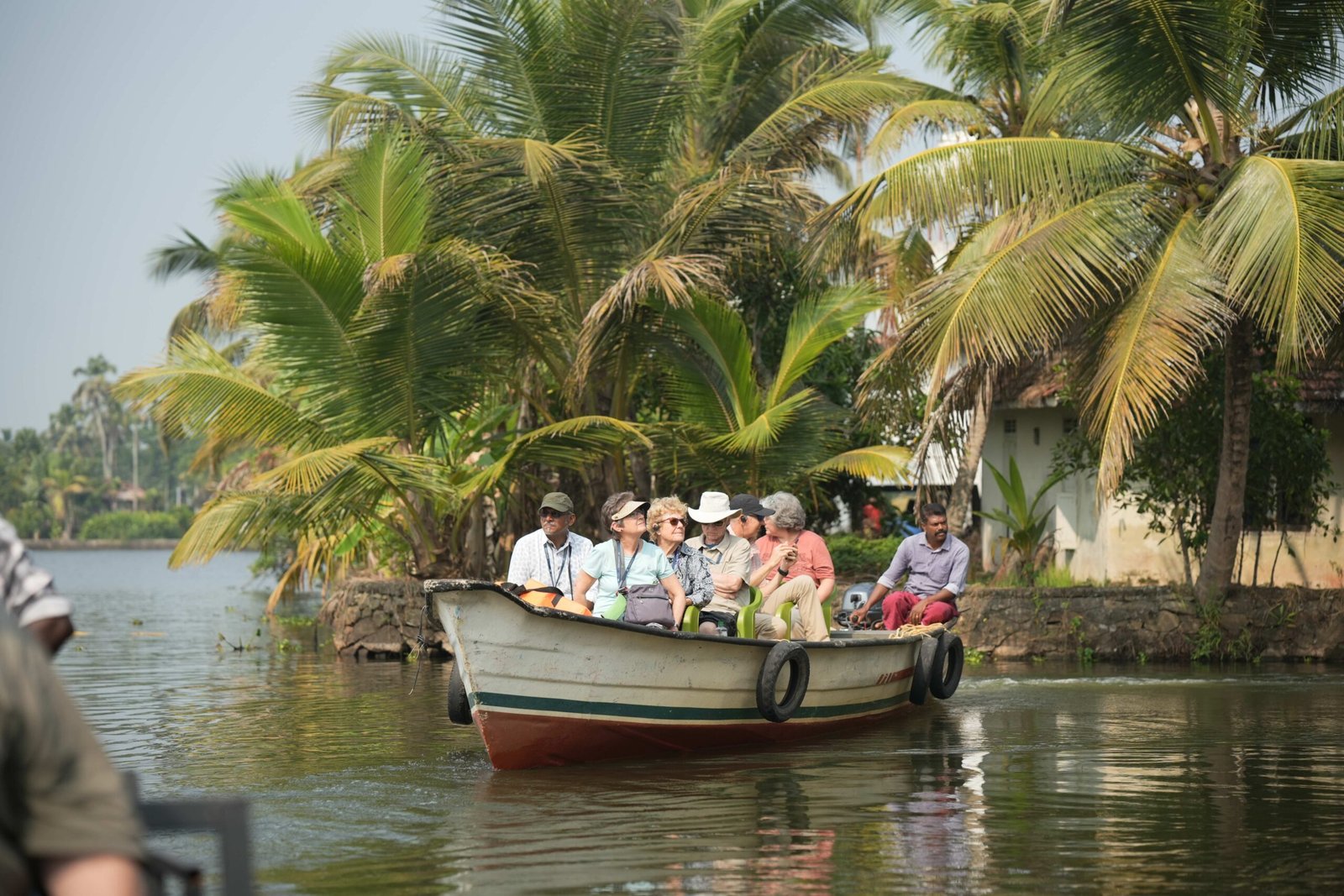
The small boat excursions Spice Routes offers get even closer. Traditional country boats navigating the tightest canals. You’re at water level. Right alongside daily life.
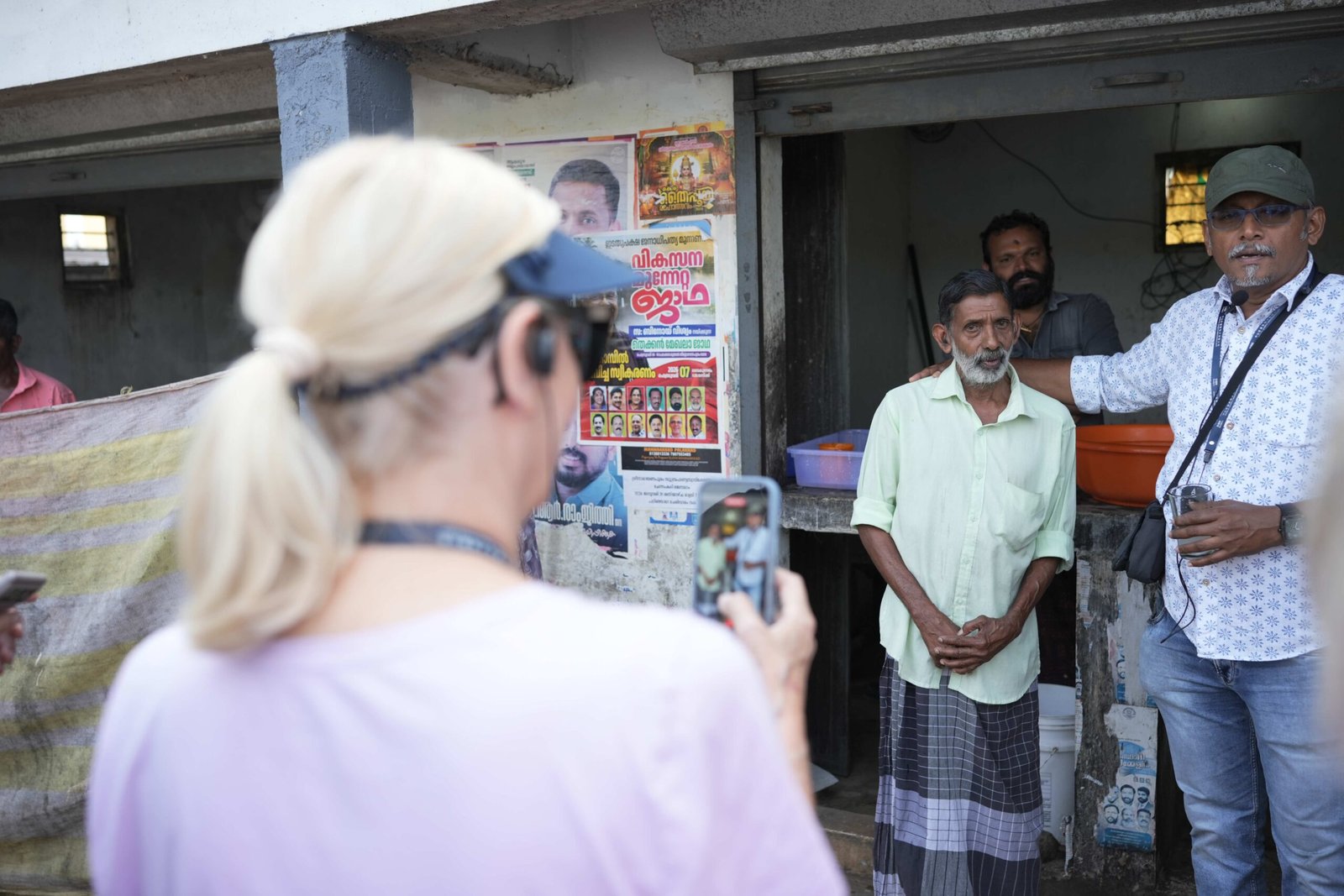
The village walks they arrange put you on the banks. Seeing activities up close that look different from the water.
This multi-perspective approach works. Viewing from the houseboat deck. From small boats. From land during village visits. Each angle reveals different aspects of backwater life.
The overnight and multi-day trips help too. Seeing the backwaters at different times of day means catching different activities. Morning fishing. Afternoon school boats. Evening temple bells.
Spice Routes doesn’t market this specifically as cultural observation tourism. But the way they operate enables it for guests who are interested.
The comfort of the luxury houseboat matters here. You can spend hours just watching from the deck because the boat is pleasant to be on. The food is good. The crew is attentive. You’re not uncomfortable or bored.
This allows the slow pace required for actually seeing daily life. Rushing between activities doesn’t work for observation. Having time and comfort to just watch does.
Not every guest wants this. Some book the houseboat for relaxation, scenery, and escape. They stay on deck reading or sleeping. That’s fine.
But for guests curious about Kerala life, the infrastructure exists to see it. The routes, the pace, the guides, the small boat options, the village access all support genuine observation.
The approach respects the communities being observed. Small groups. Trained guides. Established relationships with villages. Responsible tourism principles.
This matters because observation can easily become exploitation. Treating people as exhibits. Invading privacy. Disrupting routines.
Spice Routes has built systems that reduce these problems. The village visits happen where communities have agreed to them. The photography guidelines get explained. The guides mediate interactions.
The result is that daily life along the canals becomes accessible to curious visitors without being overwhelmed or commodified by tourism.
Close Observation of Backwater Life
Slow-paced cruising and village access on luxury houseboats: spiceroutes.in
Routes through narrow canals, guided observation, small boat excursions included.
Leave a Reply