
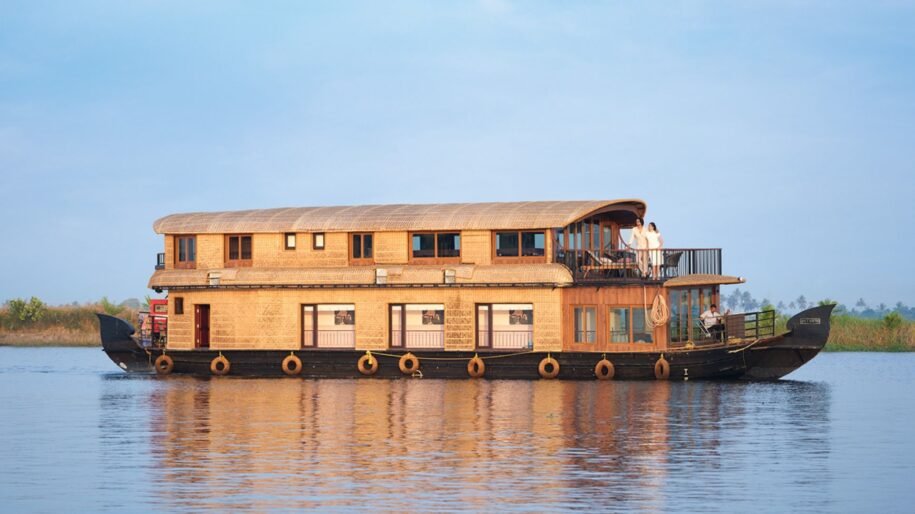
Kerala’s Department of Tourism classifies houseboats. Gold, Silver, Diamond. The categories are supposed to indicate quality levels.
Most tourists booking backwater trips see these classifications in listings and assume they mean something consistent. They don’t, really.
Understanding what the classifications actually measure, versus what they don’t measure, helps you book smarter.
The Official Classification System
Kerala government started classifying houseboats to bring order to what had become a chaotic industry.
Hundreds of boats operate. Quality varied wildly. Tourists had no way to know what they were getting. The classification system aimed to fix this.
Diamond is highest tier. Supposed to indicate luxury. Gold is mid-tier. Silver is basic.
To get classified, boats must meet certain criteria. Safety equipment. Facilities. Crew standards. Environmental compliance. The list is specific and checked during inspections.
Boats apply for classification. Pay fees. Get inspected. Receive certification if they pass. The certificate is valid for a set period, then renewal required.
The system exists and functions. Whether it actually ensures quality is different question.
What Diamond Classification Actually Checks
The inspection covers specific physical elements.
Safety equipment: Life jackets for all passengers. Fire extinguishers. First aid kit. Emergency communication equipment.
Facilities: Working toilets. Running water. Proper kitchen setup. Adequate seating and sleeping areas.
Construction standards: Hull integrity. Engine maintenance. Electrical systems. Structural safety.
Crew qualifications: Captain’s license. Cook’s hygiene certification. Staff training records.
Environmental compliance: Waste disposal systems. No direct sewage discharge into canals. Garbage management.
Amenities for Diamond class: Air conditioning in all cabins. Ensuite bathrooms. Quality furnishings. Specific space requirements.
These are measurable things. Inspectors can verify them. The boat either has fire extinguishers or doesn’t. AC either works or it doesn’t.
What Classification Doesn’t Measure
Here’s where it gets tricky. Many quality factors don’t show up in classification criteria.
Food quality: Classification checks kitchen hygiene. Doesn’t taste the food. Doesn’t verify ingredient freshness or cooking skill.
Service quality: Inspectors see crew certificates. Don’t experience how crew actually treats guests. Attentiveness, friendliness, responsiveness all matter but aren’t classified.
Route quality: Diamond boats and Silver boats might use identical routes. Or Diamond might stick to crowded main canals while some unclassified operator knows quiet backwaters. Classification doesn’t account for this.
Maintenance between inspections: Boat passes inspection, gets Diamond certificate. Six months later, maintenance slips. AC stops working well. Bathroom fixtures break. Certificate still valid but reality has degraded.
Actual luxury versus checkbox luxury: Boat can meet Diamond technical requirements with cheap furniture and thin mattresses. Or exceed them with genuinely comfortable furnishings. Classification can’t measure comfort.
Operator experience and reputation: New operator with new boat can get Diamond immediately. Experienced operator who’s been running excellent trips for decade gets same Diamond. Classification doesn’t reflect operational expertise.
The Inspection Reality
Government inspections face practical limitations.
Inspectors can’t be everywhere constantly. Boats get checked periodically. What happens between inspections is anyone’s guess.
Corruption exists. Not saying all inspections are compromised, but the system has vulnerabilities. Sometimes boats pass that shouldn’t. Sometimes fees matter more than actual compliance.
Standards are minimum requirements. Meeting minimum gets you the classification. Exceeding minimum by a lot gets you the same classification as barely meeting it.
The check-box nature means creativity and quality above requirements don’t count. Boat that provides exceptional experience but has one technical violation might rank below mediocre boat meeting all technical points.
Why Some Great Boats Aren’t Diamond
Not all excellent houseboats bother with Diamond classification.
The certification costs money. Application fees. Inspection fees. Renewal fees. Upgrading to meet Diamond requirements costs more.
Some operators serving primarily domestic market or repeat international guests don’t need the classification to get bookings. Their reputation works better than government certificate.
Older traditional boats might not meet Diamond specs but provide more authentic experience than newer boats built to certification standards.
Small operators running one or two boats excellently might skip certification bureaucracy. They get bookings through word of mouth, don’t need government stamp.
This means amazing boats exist without Diamond classification. And some Diamond boats are mediocre despite the certificate.
Why Classification Still Matters
Despite limitations, classification provides baseline assurance.
If boat is Diamond-classified, you know certain minimums are met. Safety equipment exists. AC works (or worked at inspection). Toilets function. Crew has basic credentials.
For first-time visitors with no other information, Diamond classification filters out bottom tier. You won’t get a boat with no safety equipment or broken toilets. Probably.
The classification gives Kerala tourism some quality floor. Without it, the race to bottom would be worse.
It’s not enough for booking decision alone, but it’s not meaningless either.
What to Actually Check Beyond Classification
When booking, look at factors classification doesn’t cover.

Reviews: What do actual guests say? Food quality, service, route, overall experience. Reviews reveal what classification can’t.
Operator reputation: How long have they operated? What’s their standing in industry? Do they have established base of operations like Spice Routes does with their heritage farmhouse?
Route details: Which canals will you cruise? Are they quiet backwaters or crowded tourist routes? Good operators specify this.
Food sourcing: Where do ingredients come from? Fresh local produce or bulk purchasing? Operators proud of food quality explain their sourcing.
Photos: Look carefully. You can spot quality or lack thereof. Furniture condition. Cleanliness. Finishing details.
Booking policies: Flexible cancellation suggests confidence in product. Rigid terms might indicate problems.
Communication quality: How responsive is operator? Clear communication before booking usually continues during trip.
Specific about boat: Does operator tell you exact boat you’ll get, or just a category? Knowing your specific boat matters.
The Price-Classification Relationship
Diamond classification doesn’t automatically mean high price.
Some Diamond boats charge premium prices. Others compete on price despite Diamond status. Market dynamics, operator costs, target customers all affect pricing beyond classification level.
Conversely, expensive boats aren’t automatically Diamond. Operator might target luxury market but skip certification for various reasons.
Price should reflect overall value, not just classification level. Cheap Diamond boat cutting corners on food and service isn’t better deal than slightly higher-priced Gold boat with excellent operation.
How Classifications Evolved
Early days of Kerala backwater tourism had no classifications. Chaos reigned.
Tourists got ripped off. Unsafe boats operated. Environmental damage unchecked. Industry reputation suffered.
Government introduced classification to professionalize sector. Initial implementation was rough. Standards evolved over time.
Currently the system works better than no system at all, but has known limitations everyone acknowledges.
Future changes might happen. Standards could tighten. Inspection rigor might improve. Or bureaucracy might bog it down further.
For now, it exists in current imperfect form.
International Visitors’ Perspective
Travelers from countries with strict safety regulations sometimes assume Diamond means international standards. It doesn’t.
Diamond is India’s Kerala’s best classification. That’s different from international luxury hotel standards or cruise ship regulations.
Setting expectations appropriately matters. Diamond Kerala houseboat is nice. It’s not equivalent to five-star hotel or luxury cruise ship.
Understanding this prevents disappointment. Judge Kerala houseboats by what they are, not by comparisons to completely different accommodation types.
Operator Response to Classification
Some operators embraced classification, worked to achieve Diamond, use it in marketing.
Others largely ignore it, focus on building reputation through quality and reviews instead.
Spice Routes has Diamond classification for their luxury houseboats. But they don’t lead with it in marketing. They emphasize actual experience, village programs, food quality, crew training, routes through quiet canals.

Smart operators treat Diamond as starting point, not end point. It proves certain basics, then they compete on aspects classification doesn’t measure.
What Travelers Should Prioritize
When booking Kerala houseboat, here’s what actually determines your experience:
Operator reputation: Years of operation. Review patterns. Industry standing. Base infrastructure.
Specific boat quality: Actual furnishings, maintenance level, comfort factors that exceed basic Diamond requirements.
Route selection: Quiet canals versus tourist traffic. Village access. Scenic variation.
Food program: Ingredient sourcing. Chef skill. Meal quality. Dietary accommodation.
Crew excellence: Training. Language skills. Cultural knowledge. Service attitude.
Responsible tourism practices: Community relationships. Environmental approach. Village program quality.
Diamond classification might indicate boat has these, but doesn’t guarantee them. Research beyond certificate essential.
The Unclassified Anomaly
Occasionally you find unclassified boats run by excellent operators who just haven’t bothered with certification.
Usually these are small operations, one or two boats, serving repeat guests or specific niche markets.
Booking these requires more trust and research. No government certification backing. But sometimes they deliver experiences classified boats can’t match.
Authentic traditional boats. Family operations. Unique routes. Personal attention impossible with fleet operations.
These are edge cases. Most travelers should stick with classified boats. But knowing unclassified excellence exists prevents dismissing all non-certified options.
Practical Booking Advice
Use classification as first filter, not final decision.
Start by looking at Diamond-classified boats. This eliminates bottom tier. Gives you pool of certified options.
Then investigate deeper. Read reviews extensively. Check operator reputation. Look at what they emphasize beyond classification.
Ask specific questions. About routes. Food sourcing. Crew experience. Actual boat you’ll get.
Compare several Diamond operators. The differences in quality above minimum requirements are where your decision really gets made.
Don’t pay premium just for Diamond classification alone. Pay for actual quality the operator delivers.
Red Flags Regardless of Classification
Some warning signs apply even to Diamond-classified boats:
Vague about which boat you’ll actually get. “We have several Diamond boats” without specifying means risk of bait and switch.
Can’t answer specific questions about routes or food. Good operators know their operation intimately.
Pressure tactics. “Book now, only one spot left.” Quality operations don’t need pressure.
No physical location or established operation base. Brokers reselling boat time create problems.
Prices drastically below market. If Diamond boat costs half what others charge, something’s wrong.
Recent negative reviews about basic issues. AC not working. Food poor. Safety concerns. These shouldn’t happen on properly maintained Diamond boat.
How Spice Routes Uses Classification
Spice Routes maintains Diamond classification for their luxury houseboats. They see it as basic requirement, not marketing centerpiece.
The certification ensures their boats meet government standards. Safety equipment current. Environmental compliance maintained. Crew properly licensed.
But their actual selling points go beyond Diamond requirements:
Their heritage farmhouse boarding facility that avoids crowded jetties has nothing to do with Diamond classification. It’s operational choice that improves guest experience.
The narrow canal routes through quiet backwaters aren’t measured by classification. They’re result of knowing which routes work best.
The village partnerships and cultural programs they’ve built don’t appear in classification criteria. These are years of relationship building.
The crew training that makes service excellent exceeds basic certification requirements. They invest in staff development beyond minimum.
The food quality from fresh local sourcing isn’t covered by classification. This is operational decision about where money goes.
Diamond classification proves Spice Routes meets standards. Everything else proves they exceed them significantly.
For guests, this means the Diamond certificate provides baseline confidence. The actual experience quality comes from everything Spice Routes does beyond what classification requires.
This is how classification should work. Minimum quality floor that good operators then build upon. Not a ceiling they stop at once achieved.
Beyond Diamond Classification
Spice Routes luxury houseboats: spiceroutes.in
Diamond-classified boats plus exceptional routes, crew training, village programs, food quality.
Leave a Reply