
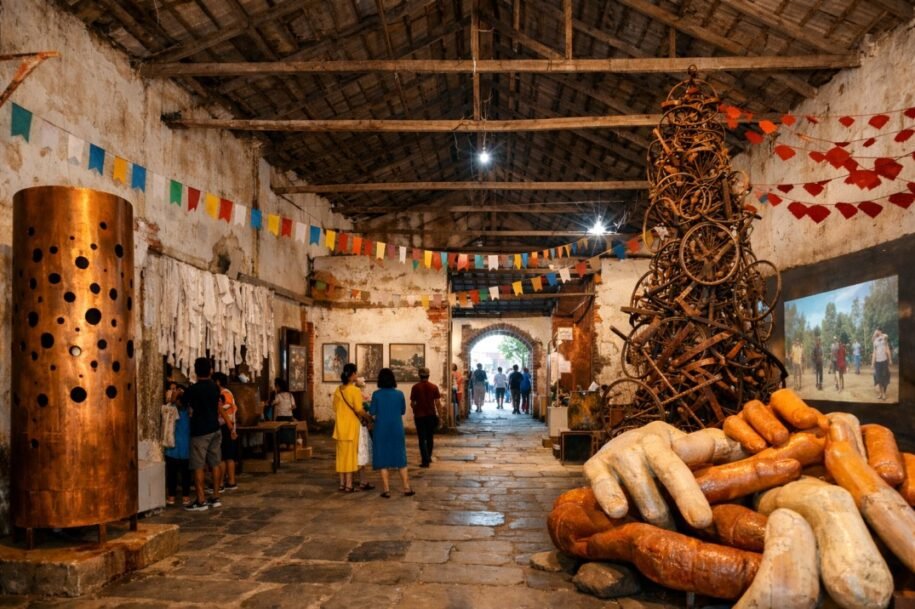
The Kochi-Muziris Biennale opened December 12 and runs through March 31. This is the sixth edition. Nikhil Chopra curated it with HH Art Spaces. There are 66 artist projects from over 25 countries, shown in Fort Kochi’s old warehouses, colonial-era buildings, and some public spaces.
Alleppey is about 53 kilometers south—maybe 90 minutes by car, depending on traffic. Many people visit the Biennale for a few days and then go to the backwaters for a luxury houseboat cruise. Others do the backwaters first. Both work fine. They’re close enough that it’s not a hassle to see both.
What the Biennale Looks Like
The Biennale happens every two years in Fort Kochi. They use buildings that already have some history—Portuguese structures from the 1500s, Dutch buildings, British offices, old spice warehouses that have been sitting empty. You walk from one venue to another through actual neighborhoods where people live. There are shops, homes, the usual daily activity.
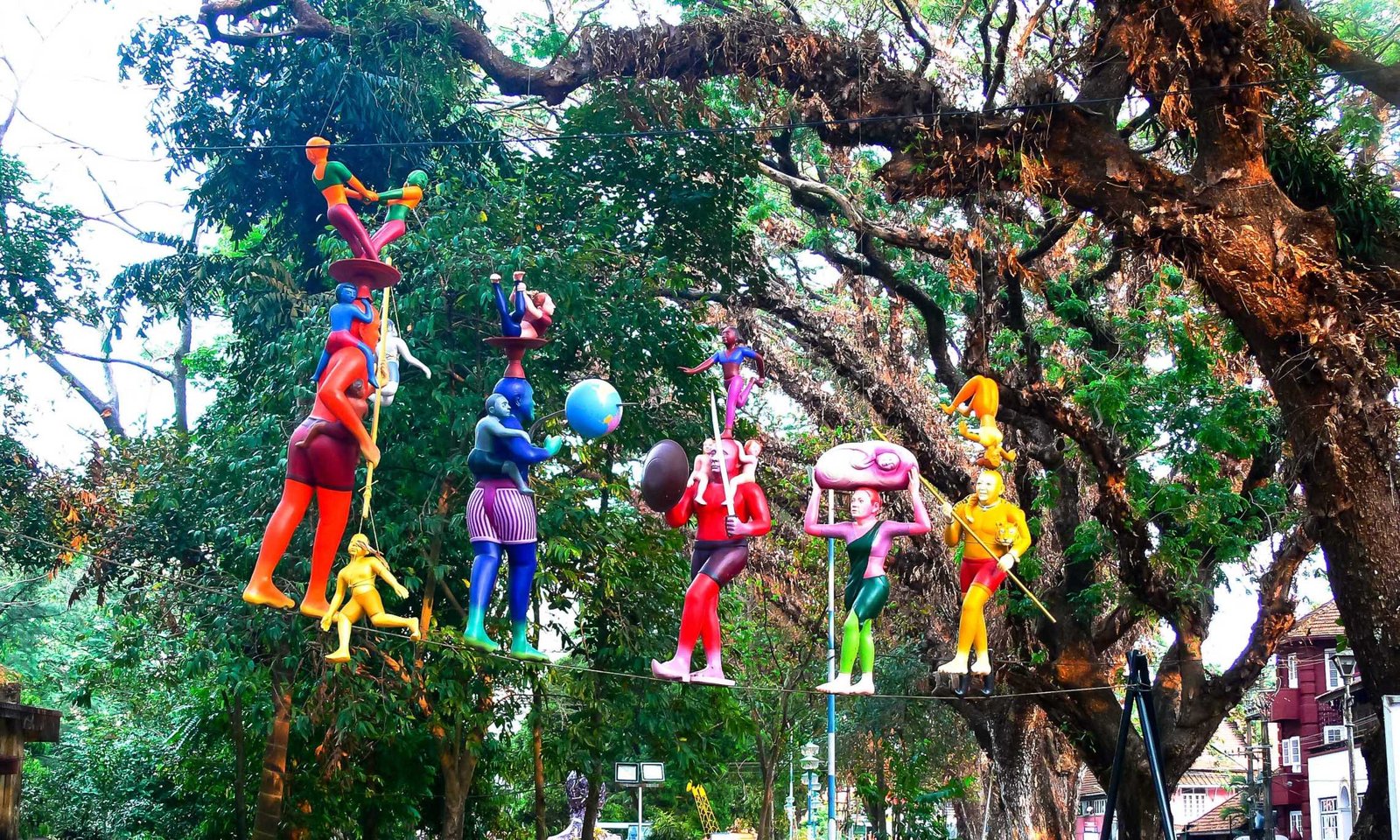
Chopra’s focus is on time, space, and shared experience. The 66 projects cover installation, video, sculpture, performance, mixed media. Some artists made work specifically for the spaces they’re in. Some performances happen outdoors in public areas. You’ll see traditional craft next to contemporary forms.
The name references Muziris, an ancient port that was here centuries ago. Spice traders came from Rome, Arabia, China. That’s why the city has so many architectural layers—each colonial power built things and left them behind.
Who Shows Up
The first Biennale was in 2012. It’s become a significant contemporary art event in South Asia. Curators come from Europe and the US. Indian art students travel here. Collectors visit. But local people attend too—families from Kerala, school groups.
There’s programming beyond the exhibitions. Artist talks, film screenings, workshops, performances. These run throughout the three months. People speak English, Malayalam, Hindi, sometimes other languages depending on who’s there.
The artist list includes many from Asia, Africa, and Latin America. Their work often focuses on climate change, migration, memory, colonial history—subjects that come up frequently in contemporary art outside Western centers.
The Backwaters
Alleppey is in the center of Kerala’s backwater system. Lagoons, canals, and rivers connect inland from the coast. This is a working area, not a tourist site turned into something artificial. People farm rice in the flatlands. Villages are built along the banks. Coconut palms everywhere.
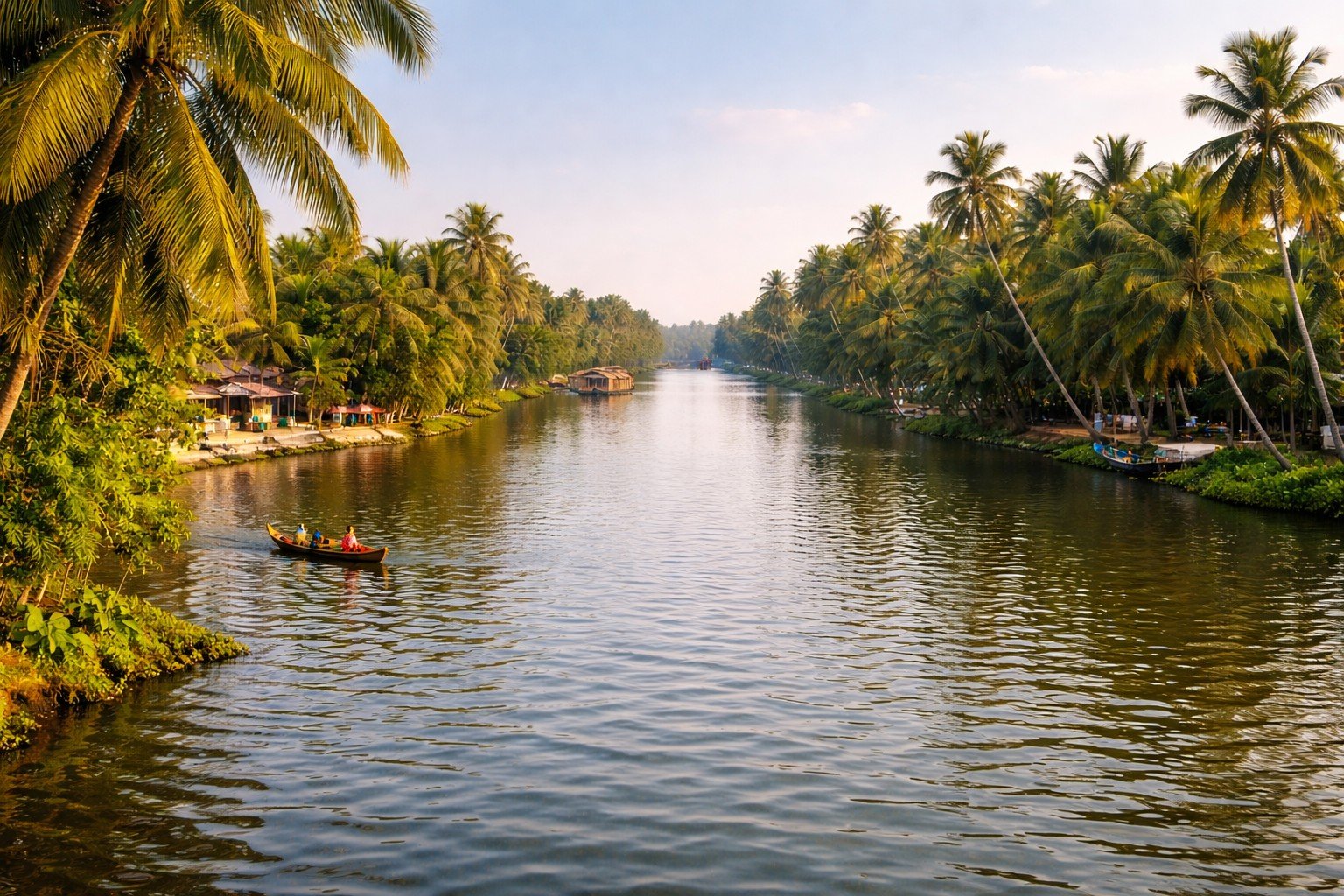
People actually live and work here. It’s not a park or reserve. Fishermen work the waters. Farmers tend paddies. Kids take boats to school. Toddy tappers climb palms. This is daily life that happens to look striking to outsiders.
Houseboats were originally used for transporting rice and goods. Now they’ve been converted for tourism, but they still move through the same waterways. The better operators—Spice Routes among them—take routes away from the main tourist channels where dozens of boats cluster together. Spice Routes’ luxury houseboats offer exclusive bookings, meaning you get the entire vessel to yourself rather than sharing with strangers.
Day Trip vs Overnight
A day cruise on a luxury houseboat runs 4-6 hours, usually starting late morning. You’ll go through narrower canals where you can see into people’s yards and daily activities up close. Villages, small temples, churches, schools pass by. Lunch gets cooked on board—Kerala food, usually rice with fish curry, vegetables, the regional style of cooking.
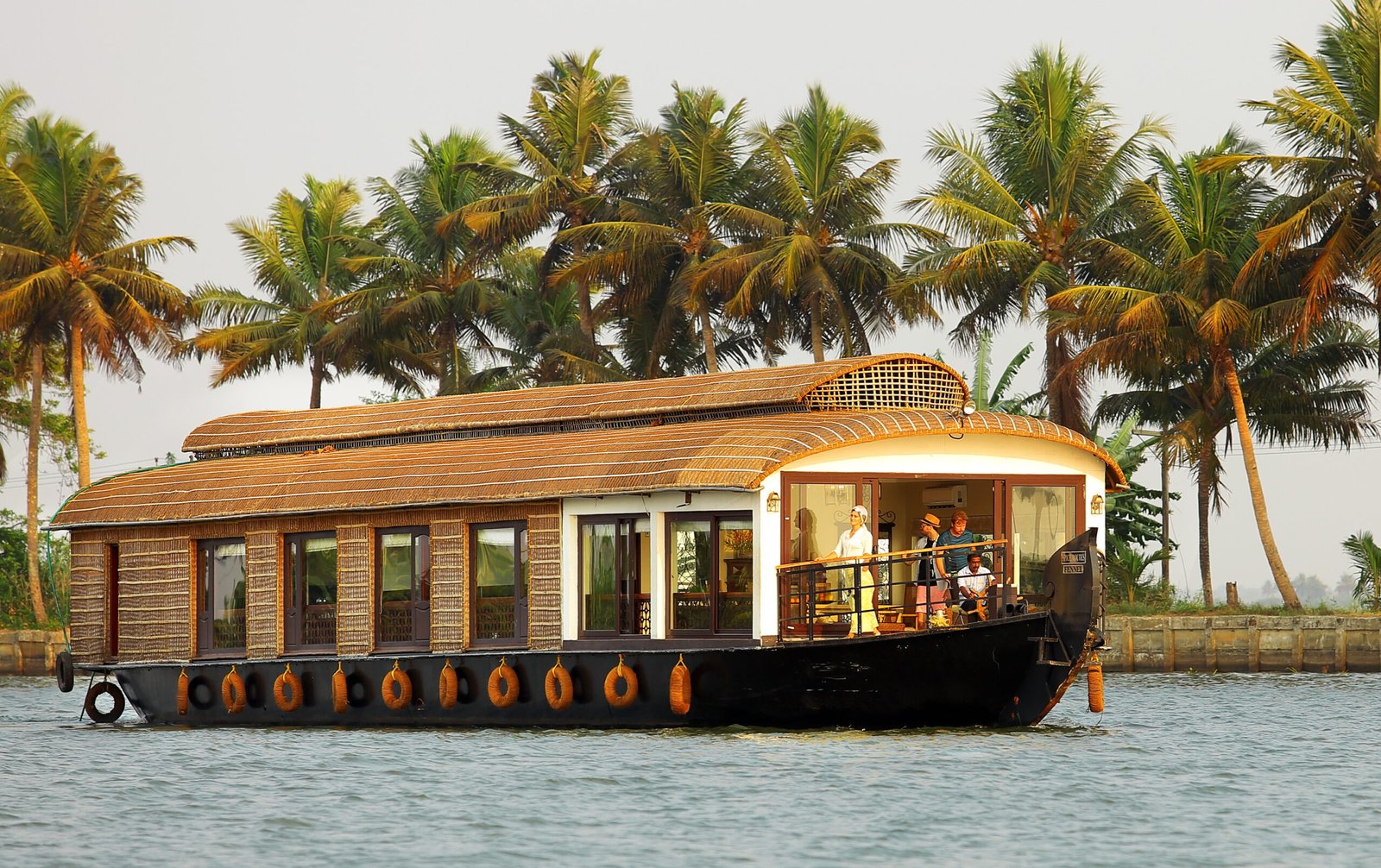
Some boats stop at points of interest. A coir-making demonstration, watching toddy tapping, maybe a small island with a shrine. These stops are brief. Most of the time you’re just moving through water and watching the landscape.
Overnight extends this. You’re on the water through sunset and sunrise, which are the better times visually. Evening light on the water is different—softer, the colors change. Morning often has mist. The boat anchors somewhere quiet at night. You hear frogs, occasional voices from shore, mostly silence.
The overnight option gives you time to do nothing in particular. Read, sleep, sit on the deck. After days of walking Fort Kochi and processing art, that downtime has value.
Planning the Trip
Two or three days works for the Biennale. The venues are spread out, and there are usually talks or events worth attending. After that, people typically do a day cruise or overnight trip on the backwaters with operators like Spice Routes before leaving from Kochi.
Some go to the backwaters first, then the Biennale. Either order makes sense.
Getting between Kochi and Alleppey is simple—hire a car, take a taxi, or use the train. The drive passes through towns and agricultural areas. It’s functional rather than scenic.
Practical Information
Biennale Details:
- December 12 – March 31, 2026
- Multiple venues in Fort Kochi and Mattancherry
- Entry to most venues is free or low-cost
- Comfortable shoes necessary—you’ll walk several kilometers
- Check the website for talk schedules and special events
Backwater Trips:
- Day cruises: typically 10 AM – 4 PM
- Overnight: check-in around noon, checkout by 9 AM next day
- December through March is peak season—book ahead
- Exclusive booking means you get the whole boat
- Prices vary widely based on boat quality and operator
What You Get From Both
The Biennale engages your head. At the Biennale, there’s a lot of looking and thinking. Considering what the work means, talking about it.
The backwaters are different. There’s nothing to interpret. Just water, villages, daily life passing by.
Kochi represents Kerala’s urban culture and layered history. The backwaters show you the agricultural landscape, how people live in rural areas, what the geography actually looks like away from cities.
Both matter if you want a fuller sense of the state. The Biennale alone gives you contemporary India engaging with global art conversations. The backwaters alone give you landscape and traditional life. Together they’re more complete.
Why This Combination Works
Travel writing often oversells these pairings—”the perfect combination” or “unmissable duo.” This one actually functions well for practical reasons. The locations are close. They serve different purposes. One fills your schedule, the other empties it. One requires urban navigation, the other happens while you’re sitting on a houseboat.
If you’re coming to Kerala specifically for the Biennale, the backwaters add a dimension without requiring major route changes. If you’re coming for Kerala’s landscape and culture, the Biennale (if your timing works out) adds serious contemporary art without taking you far off course.
Neither requires the other. But if you have the time and you’re in the area anyway, both are worth doing.
More Information:
- Kochi-Muziris Biennale dates: December 12 – March 31, 2026
- Book luxury houseboats in Alleppey: spiceroutes.in