
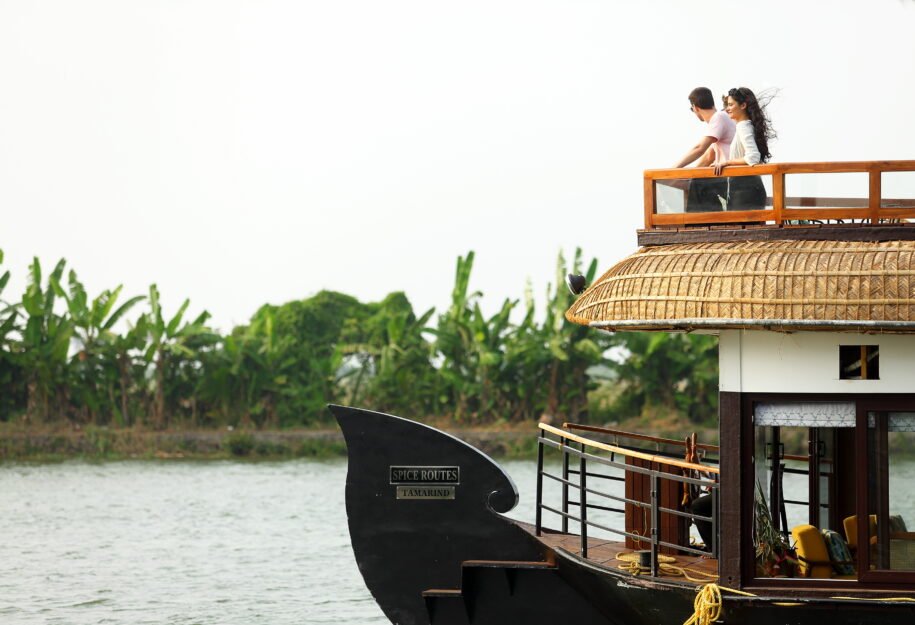
The question comes up constantly when people book backwater trips. One night or two? Day cruise or overnight? How much time do you actually need?
The answer depends less on some standard recommendation and more on what you’re after.
What One Night Gets You
One night on a houseboat covers the essential experience.
You board around noon. The boat moves through the canal system for several hours while you settle in. Late afternoon brings tea on deck. Sunset happens on the water. Dinner comes from the onboard kitchen, Kerala food done properly. The boat anchors somewhere quiet for the night. Morning has mist, usually. Breakfast happens whenever people wake up. You’re back to shore by 9 or 10 AM the next day.
That’s roughly 22 hours total. You get sunrise and sunset, both meals, a night on the water, and enough canal time to see how the backwaters actually work.
For many people, this is sufficient. You’ve experienced what makes the backwaters distinctive. You’ve disconnected from regular travel pace. You’ve eaten well and slept in a different setting. The mental break has happened.
Spice Routes runs a lot of one night trips. Most guests leave satisfied. The duration hits a good balance between meaningful experience and efficient use of travel time.
When One Night Falls Short
Some situations reveal the limits pretty quickly.
If you’re coming from far away, specifically for the backwaters, one night can feel rushed. You’ve traveled internationally or across India. You’ve built your trip around this experience. Twenty two hours doesn’t match the effort of getting there.
Large groups sometimes find one night tight. Getting everyone settled, navigating group dynamics, meals, activities, all of it needs time. By the time the group finds its rhythm, checkout approaches.
If you actually need rest, one night might not deliver. The first evening still carries travel energy. People stay up talking, exploring the boat, taking photos. Real unwinding often starts the second day, which doesn’t exist on a one night booking.
Families with young children sometimes struggle with one night. Kids need time to adjust to new environments. The first night can involve bedtime struggles, unfamiliar sounds, excitement that prevents sleep. By morning when they’ve adapted, the trip ends.
What Two Nights Changes
Two nights extends the trip to roughly 46 hours. You board noon on day one. Depart mid morning on day three.
The difference shows up in how the experience unfolds.
Day one handles arrival, settling in, initial exploration. You’re figuring out the boat, the routine, the rhythm of being on water. Evening brings dinner and first night anchoring.
Day two is when things click. You wake up already on the boat. Morning routine happens without rush. The second day’s cruise takes you deeper into quieter canal systems. Luxury houseboats with two night bookings often access routes that day trips skip. Lunch, afternoon, another sunset, second dinner. By this evening, you’re properly settled. Conversations go different places. The group or couple finds its groove.
Day three brings checkout, but you’ve had two full evenings, two sunrises, and enough time to actually slow down.
Two nights works better for:
International visitors who’ve made the backwaters a destination. The investment of time and money matches the duration better.
People who actually need rest. The second day provides genuine downtime. You’re not orienting anymore. You’re just being there.
Special occasions. Anniversaries, milestone birthdays, honeymoons. These warrant more than a quick overnight. Two nights gives the occasion appropriate weight.
Groups who want quality time. Families, friends, corporate teams. Two nights allows relationships to develop beyond surface level. Real conversations happen.
Day Cruises: The Short Option
Day cruises run 4 to 6 hours. No overnight. You board late morning, cruise through early afternoon, have lunch on board, return by evening.
This works when:
Time is genuinely limited. You’re in Kerala for other reasons. The backwaters are one element of a packed itinerary. Six hours fits where overnight doesn’t.
You want a taste without full commitment. Maybe you’re uncertain about houseboats. Maybe you’ve heard mixed things. A day cruise lets you sample the experience without booking a night.
Budget matters significantly. Day cruises cost substantially less than overnight trips. For travelers watching expenses, this delivers backwater experience at lower price point.
You’re combining it with other Kochi area activities. Day cruise in the afternoon, Biennale viewing in the morning. Or beach time at Cherai, then backwaters. The flexibility of not having an overnight lets you stack activities.
The limitation is obvious. You don’t get evening on the water. No sunset from the deck. No night sounds. No morning mist. The full sensory experience gets compressed into daylight hours.
Three Nights: When More Makes Sense
Some operators, Spice Routes included, offer three night packages.
Three nights is a lot of time on a houseboat. Seventy hours approximately. This only makes sense in specific situations.
You’re using the boat as a base for serious rest. Work burnout, post medical recovery, genuine need to do nothing for days. Three nights removes any pressure to maximize time.
You’re combining the houseboat with exploration. The boat moves to different areas. You visit villages, temples, local craftspeople. The extra time allows deeper engagement with the region rather than just seeing it from the boat.
It’s a special celebration that warrants extended time. Major anniversaries, significant birthdays, honeymoons where the couple wants days of complete privacy and disconnection.
For most people, three nights is excessive. By day three, you’ve seen the canal variations. The routine has become familiar. Unless you specifically need that much stationary time, two nights covers it.
Practical Considerations That Affect Duration
Travel logistics: If you’re flying into Kochi and have limited days in Kerala, one night might be all that fits. If you’ve built a week long Kerala trip, two nights works without straining the schedule.
Budget: Overnight trips cost more than day cruises. Two nights cost more than one. Three nights more than two. Be realistic about what you’re willing to spend versus what else you want to do in Kerala.
Group dynamics: Larger groups generally benefit from more time. Six to twelve people need space to navigate dynamics. Couples or small families can accomplish meaningful time in one night.
Season: Peak season (December through March) means better weather. You’re on deck more. The extra time feels valuable. Off season or monsoon, when you’re inside more, extended time matters less.
Other Kerala plans: If the backwaters are your main Kerala experience, lean toward two nights. If you’re also doing Munnar, Fort Kochi, beaches, spice plantations, one night on the houseboat balances the overall trip better.
What Different Travelers Actually Book
Patterns emerge from booking data.
International tourists from Europe, US, Australia tend toward two nights. They’ve come far. The backwaters are a planned highlight. Two nights feels appropriate to the journey.
Indian domestic travelers split between one night and day cruises. Time constraints from work schedules and the relative ease of returning to Kerala make shorter trips practical.
Honeymooners and anniversary couples book two nights heavily. The romance angle needs time to develop. One night feels transactional. Two nights allows the setting to work.
Corporate groups book one night typically. The backwater retreat serves specific team building purposes. One night delivers that without excessive time away from work.
Families vary widely. Those with younger children often pick one night to test how kids handle it. Families with older children or teens book two nights more readily.
How to Actually Decide
Start with honest questions.
Why are you going to the backwaters? If it’s a checkbox item on a Kerala tour, day cruise or one night covers it. If it’s a central reason you’re in Kerala, two nights makes sense.
What do you need from this experience? Just seeing the backwaters, understanding the landscape, experiencing the boat? One night works. Actually resting, disconnecting, spending quality time with your group? Two nights delivers that better.
What’s your budget really allow? Not what you could technically spend, but what feels comfortable given your overall Kerala trip costs. Be honest here.
How much time do you actually have? Count the days. Consider travel time to and from Alleppey. See what genuinely fits without creating stress.
What’s the occasion? Regular vacation, special celebration, anniversary, honeymoon, family reunion? The significance might warrant more time.
The Honest Answer
One night works fine for most people. You get the core experience. The backwaters reveal themselves. You sleep on water. You disconnect briefly from standard travel mode.
Two nights works better when the backwaters are central to your trip, when you need genuine rest, when the group dynamic benefits from extended time, or when it’s a significant occasion.
Day cruises work when time or budget restricts overnight options but you still want to see the backwaters.
Three nights is for rare situations where extended disconnection is specifically what you need.
There’s no wrong choice as long as it matches your actual circumstances rather than some imagined ideal. The backwaters deliver value whether you’re there for six hours or three days. The question is what fits your trip, your budget, your group, and what you’re honestly trying to accomplish.
Spice Routes books all duration options because different situations require different lengths. Talk through what you’re after. They’ll tell you what typically works for similar bookings. Then decide based on your reality, not generic recommendations.
Book Houseboat Trips
Day cruises, one night, two nights, three nights: spiceroutes.in
Luxury houseboats available for all duration options.