
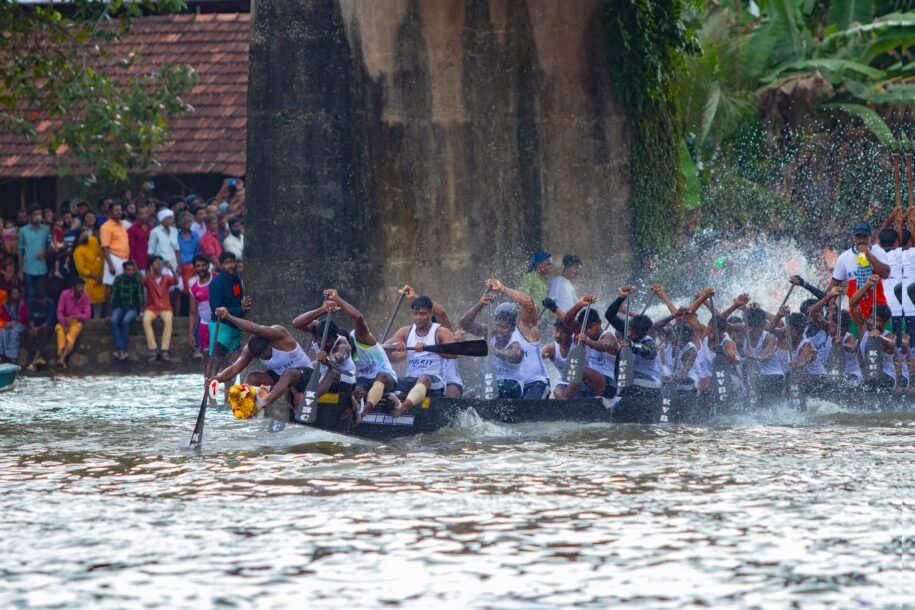
In August 1952, Prime Minister Jawaharlal Nehru attended a boat race on Punnamada Lake near Alappuzha. Watching massive snake boats surge through the water, their oarsmen moving in perfect synchronization, he was so entranced he forgot protocol entirely and danced along to the Vanchipattu, the traditional boat songs. That moment of joy became legend. Nehru donated a silver trophy shaped like a snake boat, and the race that followed bore his name. It still does. Seventy four years later, on the second Saturday of August, Punnamada Lake transforms once again into something electric.
Over two lakh people gather along the banks. International tourists line up. Buses arrive packed with spectators. The air thickens with anticipation. Chundan Vallams, the famous Kerala snake boats stretching over 100 feet, line up at the starting point. Each carries around 100 oarsmen, 10 cheerleaders, and 5 controllers. The boats themselves are architectural wonders. Traditional wood construction. Raised prows. Made to move through water with almost impossible grace for something so massive.
Why Experience It From a Houseboat
Most people watch from the banks. Standing in crowds. Craning necks. Fighting for viewing positions. Practical enough, but removed from the actual energy of the race.
From a houseboat anchored on Punnamada Lake, you’re on the water where the action happens. The sound reaches you differently. The boat’s vibration carries through the water. You feel the racing boats’ power as much as see it. The cheering from the banks becomes background to the immediate intensity on the water itself.
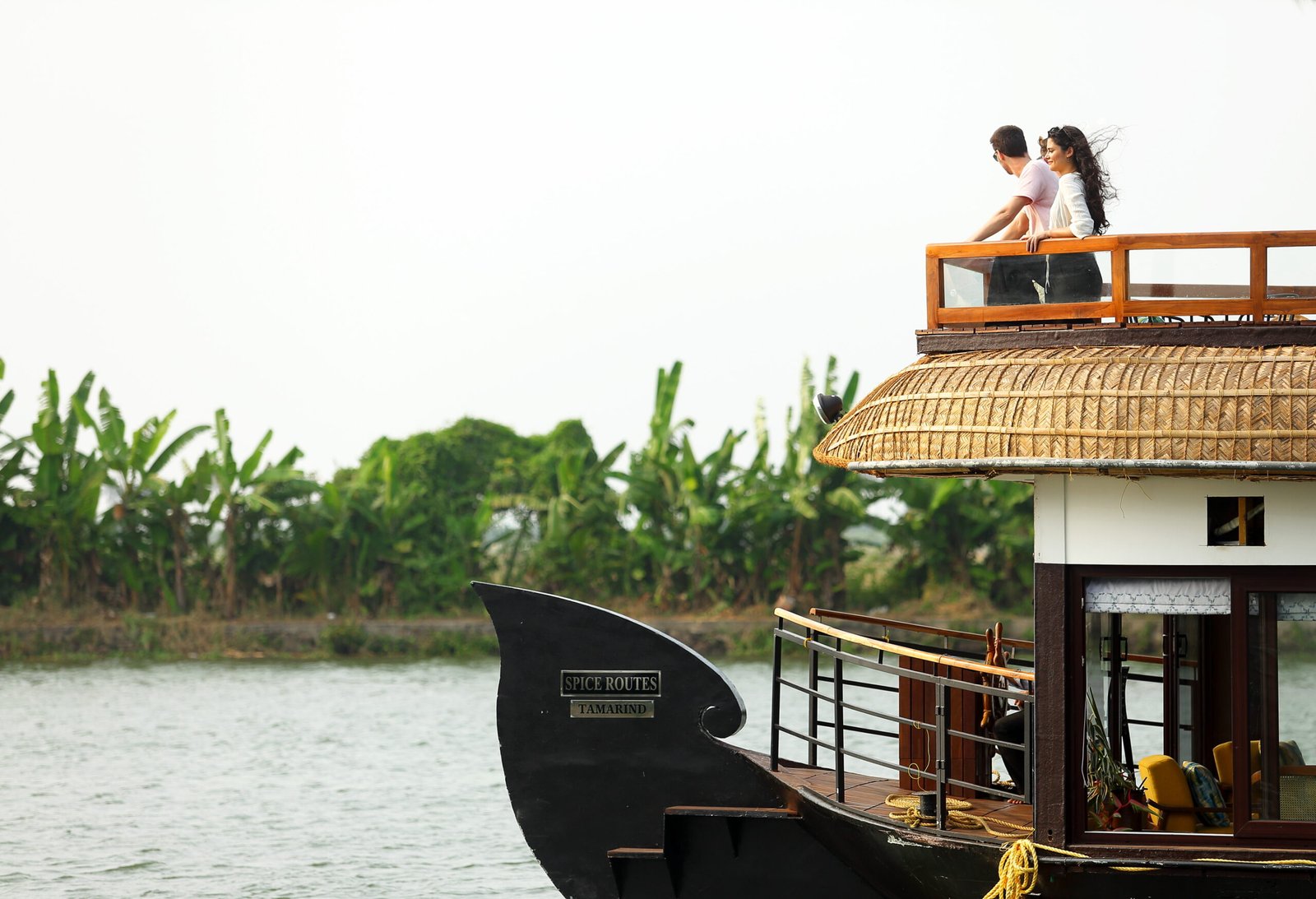
Spice Routes positions houseboats strategically for August viewing. Not random anchoring. Specific locations chosen for optimal viewing angles, safe water positioning, and proximity to the action without interfering with the race itself. You watch from the deck. Sheltered from the sun under covers. Cold drinks accessible. The crew familiar with the race having hosted it annually.
The crowds on shore don’t diminish as the day progresses. By afternoon, the banks become overwhelmingly packed. From the water, you’re separate from that pressure. The race itself is the focus, not managing logistics in a massive crowd.
The Race Itself
The race isn’t a single event. It’s multiple races throughout the day. Preliminary races start mid morning. Different boat categories compete: snake boats obviously, but also Churulan Vallams, Odi Vallams, and others. Each heat builds intensity toward the main event. By afternoon, when the grand finale approaches, the atmosphere reaches peak energy. This is when the most competitive boats race. The Nehru Trophy winner crowned. The moment the whole day builds toward.
The speed is genuinely shocking. Boats that massive shouldn’t move that fast. But watching 100 oarsmen operating in absolute unison creates velocity that defies the boat’s size. The rhythm is mesmerizing. Vanchipattu singers keep pace. Nilakkar cheerleaders urge the crew onward. The entire boat moves as a single organism.
Vanchipattu: The Heartbeat
The boat songs driving the races deserve their own attention. Vanchipattu accompanies every stroke, every moment of competition. Traditional songs rooted in Kerala culture. Mythological themes. Religious references. The rhythm matches the rowing perfectly. Singing and rowing are inseparable. Without the songs, the coordination falls apart. With them, 100 separate people become a unified force.
These songs carry history. They’ve been sung for centuries during boat races, during transport, during daily work on the water. Hearing them live from a houseboat connects you to that lineage in ways listening to recordings never does.
The Experience Timeline
You board the houseboat early morning. The lake already shows activity. Small boats maneuvering into position. Crew preparing viewing areas. A sense of anticipation building across the water.
Breakfast on the boat. Traditional Kerala morning meal adapted for guests. Strong tea or coffee. Conversations beginning about the day ahead.
As morning progresses, preliminary races start. Smaller boats moving with their own drama. Bands of supporters cheering from the water. The lake becoming increasingly active.
Midday means the sun gets intense. The covered deck becomes valuable. Lunch served on schedule. The crew monitoring crowd movement on shore, helping you understand the race schedule, providing context for what you’re watching.
Early afternoon, the main races approach. Energy visible on shore now. Boats maneuvering. The Chundan Vallams making their presence known. These aren’t subtle vessels. They announce themselves.
Late afternoon, the grand finale. The Nehru Trophy race. When the biggest boats race, carrying the weight of their villages’ pride. When oarsmen dig deepest. When victory means something to entire communities. The atmosphere electric. The race watched by hundreds of thousands, with you positioned where the action centers.
Evening winds down. Winners celebrated. Trophy awarded. The lake quieting gradually as spectators disperse. You remain on the houseboat, watching the sunset, reflecting on what you witnessed.
Practical Considerations
August is monsoon season technically, but Nehru Trophy timing (August 22, 2026) means the absolute heaviest rains have passed. You might see afternoon showers. Rain doesn’t stop the race; it’s part of monsoon culture. Humidity is high. Heat moderate. Pack light clothing. A waterproof bag for electronics worth considering.
Visibility is variable depending on weather. Clear mornings often lead to afternoon clouds. The race happens regardless. Modern houseboats handle weather well. The covered decks provide shelter if needed.
Food and water handled entirely by Spice Routes crew. You don’t need to worry about sustenance. They understand the race day timing and adjust meal schedules accordingly.
How Spice Routes Manages Race Week
They operate year round including August. This means their crews have experience with the specific challenges and dynamics of Nehru Trophy week. Routes into Punnamada Lake understood precisely. Positioning strategy refined through years. Safety protocols specific to race day conditions established.
Crew briefings explain the race structure beforehand. What to expect. When different boats race. How the scoring works. The cultural and historical context. You’re not just watching; you’re informed about what you’re seeing.
The luxury houseboats maintain full standards even during festival rush. AC functions. Bathrooms work perfectly. Food quality doesn’t drop. The operation doesn’t compromise even when August brings festival intensity.
The Nehru Trophy Experience Is Kerala
This isn’t tourist performance arranged for visitors. This is Kerala celebrating itself. A festival rooted in centuries of boat culture, modernized but not fundamentally changed. Watching it from a houseboat on Punnamada Lake means experiencing it from inside that culture rather than as an outsider observing.
The two lakh people gathering aren’t mostly tourists. They’re locals. Families. Communities whose villages have boats racing. The investment is real. The competition fierce. The tradition genuine.
Festival Experiences on Luxury Houseboats
Spice Routes: spiceroutes.in
Nehru Trophy race week positioning, monsoon season houseboats, experienced race day crew, year round operation.
Leave a Reply