

Dawn breaks over Vembanad Lake. Mist hangs low. The water mirrors the sky. Then the sound arrives. Not loud, actually the opposite. The soft chorus of calls from hundreds of birds already awake and active. From your houseboat deck, you raise binoculars. A White throated Kingfisher dives suddenly. A flash of blue penetrates the mist. A Cormorant surfaces with breakfast. The morning unfolds without hurry. Without crowds. Without the infrastructure of organized tourism.
This is birdwatching from a houseboat on Kerala’s backwaters. Not driven to sanctuaries by schedule. Not following group dynamics. Just floating through habitat where birds live their actual lives, observing them where they function naturally.
Two Distinct Birdwatching Zones
The backwaters around Kumarakom and Pathiramanal Island offer different experiences. Kumarakom Bird Sanctuary, formally established within 14 acres on Vembanad Lake’s eastern shore, provides structured sanctuary environment. Protected waterways. Managed habitat. Guided tours available. Over 180 bird species documented: 90 resident, 50 migratory species.
Pathiramanal Island, meaning “Sands of Midnight” in Malayalam, takes different approach. Minimal human interference. No commercial establishments. Walking trails only. Nearly 100 local bird species, around 50 migratory species. The island’s undisturbed state makes it roosting ground for water birds that need genuine solitude. Cormorant families nest here. Darters hunt undisturbed. The sanctuary works because it remains largely uncommercialized.
From a houseboat, you access both zones. Movement between them requires simple boat navigation through familiar waterways.
What You’ll Actually See
Morning hours deliver best birdwatching, before heat drives activity into shade. Your houseboat crew navigates quietly through sanctuaries. Binoculars up. Movement minimal. The boat’s gentle glide (no engine noise, just paddle and pole) permits close approach without alarming birds.
Water birds dominate visually. Egrets in multiple species: Little Egret, Cattle Egret, Grey Heron, Purple Heron. Cormorants diving for fish. Darters hunting underwater. The terminology matters less than the observation itself, watching birds execute their morning routines with precision perfected across millennia.
Kingfishers mesmerize most visitors. Common Kingfisher (small, brilliant blue). White throated Kingfisher (larger, jeweled orange). Stork billed Kingfisher (massive, improbable creature somehow sustaining its weight). Watching kingfisher dives never gets old. The approach. The pause. The explosive dive. The rarely successful catch. Nature’s entertainment loop playing constantly.
Waterbirds include teals and ducks specific to monsoon season. Siberian Stork, Garganey, Pintail Duck, Spot billed Pelican arrive November through February. Rarer sightings include eagles: Brahminy Kite, Marsh Harrier, occasional Steppe Eagle.
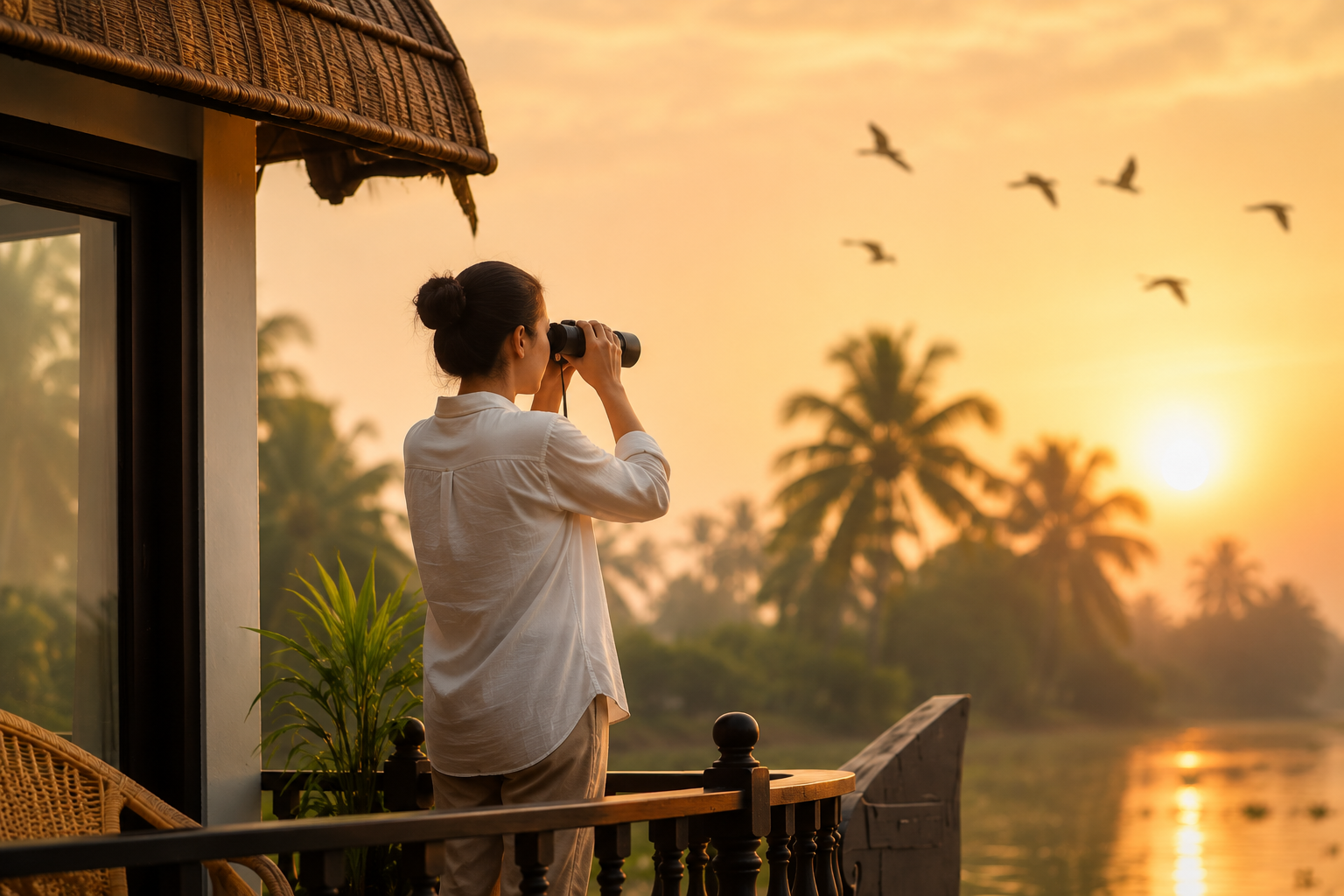
Less obvious are the smaller birds. Terns skimming water. Whistling Ducks in flocks. Jacanas walking on floating vegetation. The soundscape reveals birds you might not spot visually. Mynah calls. Parrot squawks. The nameless calls of species you haven’t identified yet. Part of birdwatching’s appeal is this incompleteness. No field guide covers everything. No visit reveals all species. Mystery remains.
Pathiramanal Island Specifically
The short boat ride from your houseboat to Pathiramanal Island (20 to 30 minutes depending on starting point) delivers intimate experience. The island itself allows walking without disturbance. Trails through modest vegetation. Open water edges for observing birds fishing. The absence of commercial development means silence rarely breaks except for bird calls.
Visit early morning. The light arrives soft and golden. Shadows long. Birds active. By afternoon, heat drives activity down. Evening brings secondary activity burst before darkness, but morning consistently produces best observations.
The island’s isolation makes it perfect for birds needing genuine rest. Cormorant colonies roost here. Darter families nest. Heron groups stage before dispersing into daily hunting. Your presence matters: keep distance. Keep quiet. The birds tolerate observation only when unthreateningly approached.
Photography works superbly on Pathiramanal. The light is photographer’s light. The birds relatively predictable in patterns. The backdrop of water and sky complements subjects well. Bring quality binoculars and serious camera equipment if photography is your goal.
Kumarakom Bird Sanctuary’s Different Character
The sanctuary proper offers more structure. Guided boat tours available. Walking paths established. Wildlife interpretation provided. For serious birdwatchers seeking systematic observation, the sanctuary provides better infrastructure than Pathiramanal’s raw experience.
The sanctuary’s 14 acres concentrate diverse species. Management protects vegetation birds require. Feeding areas maintained. Nesting sites protected. The combination creates density of birdlife higher than random backwater cruising produces.
A morning in the sanctuary yields 30 to 40 species easily. Enthusiasts with expertise identify 50 plus in dedicated morning. Each afternoon changes the cast slightly. Migratory species come and go seasonally. Breeding residents attend nests. Year round residents maintain territories.
Seasonal Patterns Matter
November through February brings migratory bonanza. Siberian species arrive. European visitors appear. The backwaters swell with diversity foreign to tropical zone residents. This season attracts international birdwatchers pursuing rare sightings.
But other seasons hold their own appeal. June through August breeding season concentrates resident birds. Nesting activity, fledgling observations, territorial displays. Different birds active. Different behaviors visible.
Monsoon (June to September) sees rain activity testing your patience, but green landscape and energized wetlands attract birds adapted to wet season. Different ecosystem energy than dry season.
There’s no single best time. Each season reveals different avian story.
Integration With Houseboat Living
The fundamental advantage of birdwatching from houseboat is temporal flexibility. You’re not leaving by sunset to return to hotel. You’re not commuting to sanctuary at fixed times. You drift at natural pace. Follow birds’ rhythms rather than schedule’s demands.
Early morning means rising before formal day. Spice Routes accommodates this. Tea available when you want it. Breakfast ready when birdwatching concludes. The crew understands you’re observing wildlife, not sightseeing. They modify routines accordingly.
Midday provides rest time. Fatigue is real after morning of concentration. Lunch, rest, field guide consultation. Photograph review. Species checklist updating. The afternoon’s ease prepares you for potential evening activity.
Some houseboats position themselves specifically for birdwatching. Quiet anchorages. Located near sanctuary edges. Minimal engine use. The placement strategic for morning observation without commute.
The houseboat as base camp works psychologically too. You’re not visiting ecosystem as outsider. You’re living within it temporarily. The birds become part of daily existence. The observation becomes lifestyle moment rather than tourist activity.
Equipment Considerations
Quality binoculars matter more than expensive cameras. Good optics (8×42 magnification standard for birding) let you see behavior distant photography can’t capture. Spotting scope optional but valuable for difficult identifications.
Field guides specific to India. Multiple region coverage. The birds of Kerala overlap Indian subcontinent but also host unique species. Cross reference multiple sources when uncertain.
Notebook invaluable. Recording observations immediately: “Tuesday, 7 AM, small kingfisher with white throat, approx 6 inches, diving near north point.” Details recorded immediately convert observation to knowledge. Patterns emerge over time.
Photography useful but not essential. Phone cameras capture memories. Serious optics produce publishable images. But observation without photography often proves more satisfying.
Bring patience primarily. Birdwatching rewards stillness and attention. Rushing yields nothing. Slow observation yields everything.
How Spice Routes Facilitates Birdwatching

They understand birdwatchers travel differently. Early starts accommodated. Quiet position in water maintained. Crew knows which areas hold concentrations. They’ve hosted birdwatchers regularly. The expertise shows in positioning, timing, understanding of bird behavior patterns.
Binoculars available onboard for guests without their own. Field guides in cabin. The crew points out species visible from deck. Suggestions of movement timing for optimal observation.
The houseboats themselves designed for stillness if required. No excessive engine noise. Movement when needed, anchoring when observing. The rhythm adapts to guests’ needs.
Meals can adjust for early start. Late afternoon return timing accommodates observation. The operation flows around birdwatching priorities rather than forcing birdwatching into standard tourism schedule.
Expected Species Checklist
Common sightings include cormorants, darters, all heron species mentioned, kingfishers in three varieties, whistling ducks, common teal, teals of multiple species, egrets in all varieties, ibis, jacanas, rails, watercock, spot billed pelican, storks (during migration), various raptors, terns, gulls.
Less common but possible: Siberian crane (winter only), garganey, pintail duck, osprey, marsh harrier, steppe eagle, various flycatchers, mynahs, parrots.
Rare sightings include specific eagle species, unusual migrants from across Asia. Documenting rarities rewards patience over multiple visits.
The comprehensive list exceeds 180 species total. Seeing 40 in single morning means 140 plus remain unobserved. Return visits always reveal new species.
The Larger Ecology
Understanding birds deepens when understanding habitat. Wetlands support food chains. Fish populations sustain bird populations. Vegetation provides nesting. Shallow water creates hunting ground. The interconnection becomes visible through observation.
Kerala’s backwaters are Ramsar wetlands, internationally recognized for ecological significance. That designation means protection. The birdwatching you enjoy depends on conservation efforts.
Discussing conservation with Spice Routes crew deepens understanding. Local knowledge accumulates. You learn which species are declining, which recovering. The human relationship to wildlife becomes complex. Not simply aesthetic observation. Actually participating in ecosystem awareness.
The Intangible Benefits
Birdwatching from houseboats delivers experiences beyond species count. The silence. The immersion in natural world. The slowness required. The attention demanded. These elements accumulate into something approaching meditation.
The social aspect, sharing observations with your houseboat companions, builds intimacy. Spotting something together creates memory. The collective excitement of rare sighting bonds group.
The solitude, observing alone at dawn, provides restoration. Modern life’s constant connectivity disappears. You’re present entirely to the moment. The bird. The water. The light. Nothing else.
Wildlife Experiences on Luxury Houseboats
Spice Routes: spiceroutes.in
Leave a Reply