
In Kerala, monsoon isn’t something to escape. It’s something to surrender to. Mid July through mid August, a period called Karkidakam, the entire state shifts rhythm. People slow down intentionally. Families return home. Routines adjust. For generations, this month has been understood as the right time for deep healing.
The reason is physical, not mystical. When monsoon arrives, your body changes. The humidity opens your pores completely. Your skin becomes permeable in ways it isn’t during dry months. The cooler air and heavy atmosphere naturally weaken your digestive fire. Toxins accumulated through the year suddenly become mobilizable. Your tissues absorb medicines and oils more completely than at any other season. Weeks of treatment in winter might accomplish the same results in days during Karkidakam.
Ayurvedic practitioners have understood this for centuries. The classical texts, including the Ashtanga Hridayam, dedicate entire chapters to seasonal treatment because the timing matters that much. You’re not just receiving treatment. You’re aligning treatment with your body’s seasonal readiness. That alignment changes everything about how effective the healing becomes.
Stay on a houseboat during Karkidakam and you feel this shift naturally. The rain. The green. The slower pace the weather enforces. It’s not external imposition of wellness routine. It’s working with what’s already happening in your body and environment.
How Your Body Actually Changes in Monsoon
Monsoon stresses your system in specific ways. The humidity and cooler temperatures aggravate Vata, the dosha governing movement and nervous system. Your digestion weakens. Accumulated stress and toxins (called Ama in Ayurveda) settle deeper into tissues because they can’t process out as easily. Joint stiffness increases. Mental restlessness often peaks.
But simultaneously, the conditions that create these challenges also create the solution. Your body’s receptiveness to treatment reaches peak levels. Medicated oils soak in deeply. Herbal medicines work faster. The internal channels open fully. It’s like your body is literally asking for help and simultaneously most capable of receiving it.
This is why Ayurveda says monsoon is the only time to do deep detoxification. Not as trend. Not as luxury wellness package. As actual medicine at the right moment.
What Actually Happens Onboard
Spice Routes coordinates Karkidaka retreats during July and August for guests specifically seeking this type of healing. The houseboat becomes your wellness base, not a spa resort offering treatment menus, but an actual therapeutic space where you rest and receive care.
Before anything begins, a qualified Ayurvedic practitioner sits with you. They’re not checking boxes. They’re assessing your constitution (Prakriti), understanding your current health, identifying which doshas are imbalanced for you specifically. The treatment they design is yours alone, not a standard package they offer everyone.
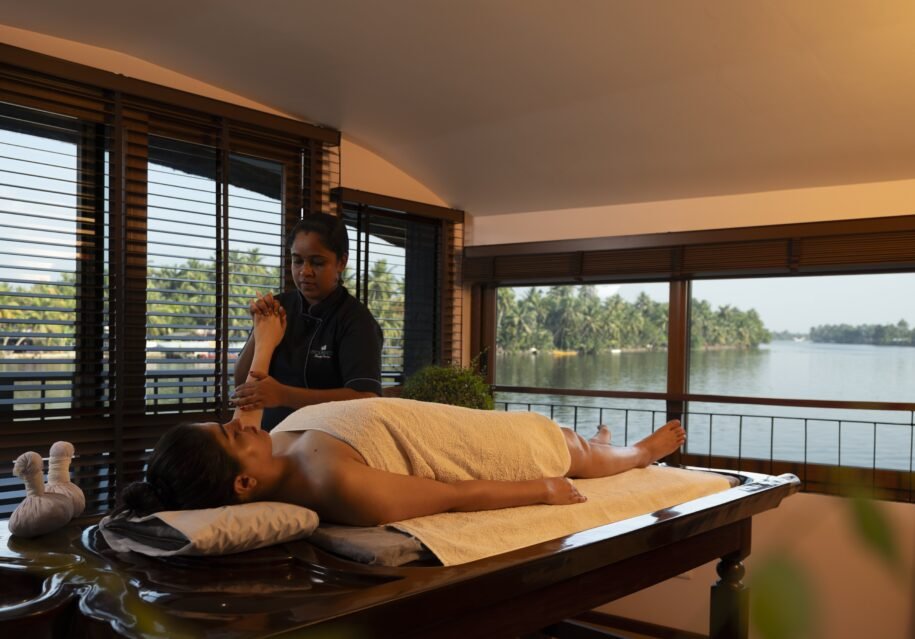
The day itself follows natural rhythms. Early morning tea. Then treatment, likely starting with Abhyangam, a full body oil massage using oils formulated specifically for monsoon Vata aggravation. Heated oils. Systematic application. The skilled hands work while you lie on deck under shelter, listening to canal sounds. Your pores open. The medicine soaks in.
After the massage comes Swedana, herbal steam therapy. Your opened pores pull the humid monsoon air deep. Heat and moisture together intensify the effect. Morning concludes and you rest. Actual rest, not activity.
Lunch is light, prepared according to Ayurvedic guidelines for monsoon digestion. Then quiet afternoon time. Maybe a second treatment in late afternoon if your protocol includes it. Perhaps Shirodhara, continuous pouring of warm medicated oil on your forehead, releasing accumulated stress from your mind and nervous system.
Evenings shift toward nourishment. The kitchen prepares Karkidaka Kanji fresh daily, a medicated rice porridge that becomes the cornerstone of your treatment. This isn’t some bland wellness food. It’s actual medicine designed to restore your digestive fire during monsoon. Medicinal rice varieties (Raktashali or Njavara) combine with carefully measured herbs like Dashamoola and Ashwagandha. The result tastes genuinely good while directly addressing what monsoon has weakened inside you.
The Role of Karkidaka Kanji
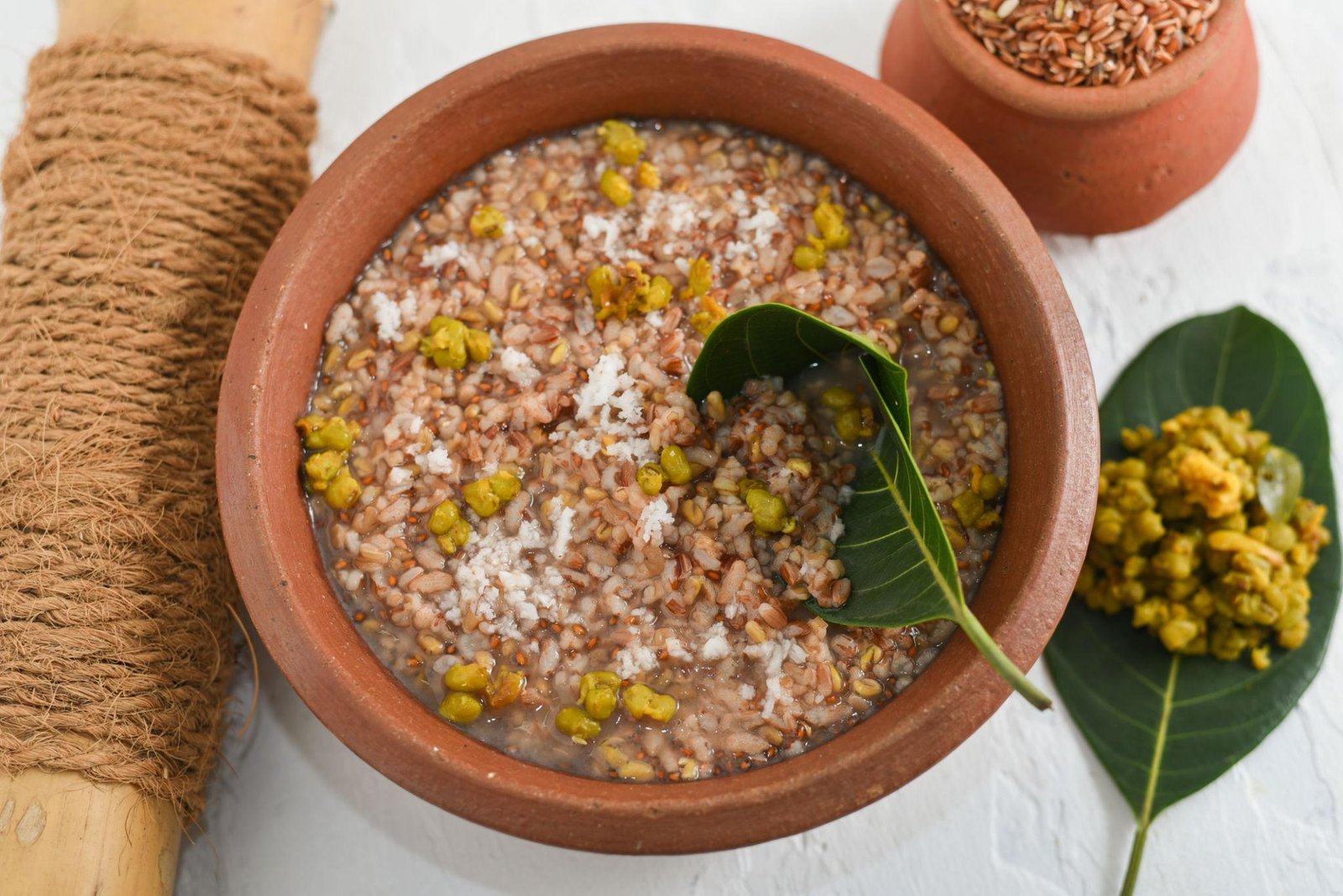
This rice porridge isn’t decoration or supplement. It’s core medicine. The Kanji addresses the specific problem monsoon creates: your digestive capacity drops when humidity peaks and temperature cools. You need food that restores that capacity rather than strains it further.
The medicinal rice varieties matter more than you’d expect. Njavara and Raktashali aren’t regular rice. They carry therapeutic properties ordinary white rice completely lacks. Combined with herbs like Dashamoola (literally “ten roots”) and Ashwagandha, the Kanji works systematically. Day by day, your digestion strengthens. Toxins that couldn’t clear start moving out. Your immunity builds for the months ahead.
The chef on your houseboat prepares fresh Kanji daily. They’re not following a recipe book. They’re adjusting composition based on your specific condition. Your digestive pattern might require different herb emphasis than another guest’s. This isn’t just personalized; it’s actually therapeutic medicine rather than one size fits all wellness food.
Treatment Depth Depends on Your Goals
How intensive your Karkidaka experience becomes depends entirely on what you’re seeking and your health status. Some people come for five days, a real introduction to the practice without overwhelming commitment. Others commit fourteen days when they want meaningful shifts. The most serious practitioners stay the full month, working through complete Karkidakam.
If you’re dealing with chronic arthritis or significant joint problems, the practitioner might recommend Panchakarma, a five step cleansing process that sounds intense (it includes therapeutic purging and enemas) but actually works systematically. It’s classical Ayurveda’s most powerful detoxification approach. Not for everyone, but if your constitution needs it, the results justify the intensity.
Gentler approaches work better for others. Just repeating Abhyangam and Swedana combined with dietary discipline accomplishes substantial healing for many people. No aggressive procedures. The focus stays on gradual toxin release and progressive rebalancing. The practitioner assesses you specifically, then recommends what actually fits your body and your goals, not what sounds impressive.
What People Actually Experience
People who do Karkidaka Chikitsa repeatedly notice real changes. Joint pain loosens. Morning stiffness that’s plagued them for years decreases noticeably. Some people with arthritis are shocked at how much mobility returns. Digestion normalizes, food stops sitting heavy. Sleep deepens in ways they’d forgotten was possible.
Mental clarity sharpens. The stress and anxiety that built up through the year seems to release. Cortisol levels drop. The monsoon rhythm combined with consistent Shirodhara therapy (that forehead oil pouring) creates genuine mental quieting. People describe it as a reset they didn’t know they needed.
Even skin improves, conditions like eczema or psoriasis that monsoon normally aggravates often clear up with proper treatment. The whole system seems to reset. And immunity strengthens noticeably. People who complete proper Karkidaka courses catch fewer infections through the months that follow. It’s preventive medicine that actually prevents rather than just claiming to.
The Monsoon Houseboat Environment
Being on water during Karkidakam enhances treatment in tangible ways. After heated oil massage and steam therapy, the breeze off the canal cools your body naturally. The sound of rain on the roof isn’t interruption, it’s reminder that you’re aligned with monsoon’s actual rhythms. The water surrounding you creates genuine calm.
Around you, village life functions exactly as it would without tourists. You watch how communities adapt to monsoon. How fishermen adjust routines. How agriculture proceeds. That context, seeing seasonal life actually lived, deepens your understanding of why Ayurveda times treatment this way. You’re not isolated in a wellness resort. You’re experiencing seasonal medicine while actually living seasonally.
A houseboat offers genuine privacy. Unlike wellness centers where other guests create constant activity, your houseboat creates real sanctuary. Only your companions nearby. The crew manages interruptions carefully. Complete rest without disturbance becomes possible.
How Spice Routes Handles It
They manage every logistical detail. The Ayurvedic practitioner schedules treatments consistently. Medications get sourced. Kanji prepared fresh daily. All your food aligns with what your body needs during treatment. You show up and receive care. That’s it.
They understand the timing matters. You shouldn’t arrive exhausted from travelling and immediately start detoxification. First day allows arrival and adjustment. Treatment proper begins the next morning when your body is ready. Departure timing gets scheduled after integration time so you’re not rushing away before the benefits settle.
Bring your personal items and any prescriptions you take. Everything else is handled.
Solo, Couples, or Small Groups
Some people come alone for intensive personal focus. Others bring their partner, deepening the experience through shared process. Small family groups align on wellness sometimes.
The individual treatment remains completely personalized regardless. Your Kanji formula adjusts for your needs. Your Shirodhara timing fits your schedule. But being with companions adds something; evening conversations deepen understanding. Shared experience of the monsoon and healing creates its own benefit.
Privacy gets maintained. You can spend treatment time completely alone or join companions during rest periods. The houseboat setup naturally supports this flexibility.
Duration: What Makes Sense
Five days works as real introduction. You experience the treatments. You taste Kanji. You feel the shift starting. But transformation? That requires longer. Five days plants the seed.
Fourteen days allows actual work. The first week mobilizes toxins and begins rebalancing. Your system adjusts to treatment. By the second week, consolidation happens. By the end, changes are visible: digestion works better, energy stabilizes, mental fog lifts. This duration works for people who can take time but need meaningful results.
Full month (twenty eight days) represents complete traditional Karkidakam treatment. This is for serious practitioners or people addressing chronic conditions that won’t shift in two weeks. The depth of work possible at this duration is qualitatively different. But it demands real commitment.
Why This Matters Beyond Wellness Trends
Karkidaka Chikitsa works because it’s preventive medicine that actually prevents. You’re not waiting for disease to develop then fighting it. You’re working seasonally to prevent illness before it takes root. That approach, working with nature’s cycles rather than against them, is what makes traditional medicine genuinely different from modern interventionist approaches.
Most of us live disconnected from seasons. Same routine year round. Same diet. Same schedule. Our bodies don’t match that consistency. Monsoon asks something different of your system. Karkidaka answers that ask. You slow down. You receive care. You let your body reset during the exact season it’s most capable of resetting. That alignment, body, climate, treatment, timing, is what makes the difference.
Wellness Retreats on Luxury Houseboats
Spice Routes: spiceroutes.in
Leave a Reply