
Kerala’s monsoon season arrives around June 1st and continues through August—the Southwest monsoon, locally called Edavappathy. For most travelers, this is the time to avoid the backwaters. The rains are heavy. The humidity soars. The tourist infrastructure quiets down. But staying on a houseboat during monsoon is a fundamentally different experience than visiting in peak season, and understanding what actually changes helps you decide whether it appeals to you.
The misconception is that monsoon means constant downpour and misery. The reality is more nuanced. July brings roughly 28 days with precipitation, which sounds comprehensive until you understand the pattern. Rain typically hits hard in the afternoon—sometimes violent, sometimes moderate—but mornings tend toward light drizzle or dryness, and evenings often clear enough to see the sky. The temperature stays pleasant, roughly 22-28°C depending on location, which is actually cooler and more comfortable than Kerala’s blistering summer heat. Yes, the humidity is relentless. No, you won’t escape it. But on a houseboat, where you’re constantly on water and around breeze, the humidity feels different than being stuck in a landlocked town.
What makes monsoon genuinely transformative is what happens to the landscape itself. Water levels rise dramatically. Canals that were shallow in winter become fully navigable. Routes that were impossible to traverse suddenly open up. The entire region turns an almost impossible shade of green—not the bright greens of spring, but a deep, layered green that comes from constant rain and growth. Rice paddies shift from brown to emerald. The villages shift rhythm entirely. This isn’t tourist season. This is working season. You’ll see families engaged in seasonal agriculture, children moving differently through daily routines, the actual functioning of backwater life without the performance aspect that comes with tourism.
What Actually Changes on Your Boat
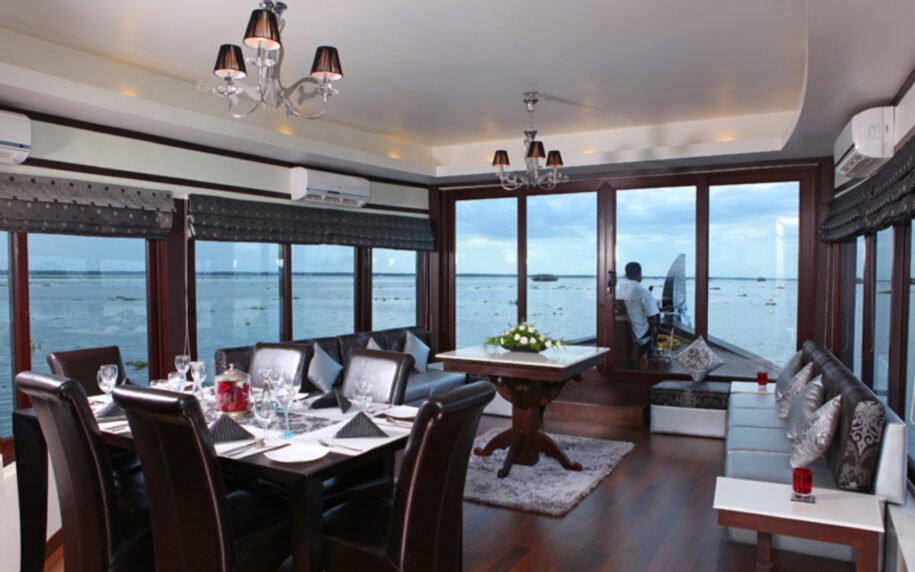
Being on a houseboat during monsoon means the covered deck becomes your primary living space. You’re still outside, still watching the canals, still experiencing the water. But you’re sheltered. Rain doesn’t stop boat operation—it just changes where you spend your time. The boat might rock slightly more when weather kicks up, but modern houseboats handle it smoothly. Most guests adapt within hours. What does change noticeably is the sound. Rain drumming on the roof creates a rhythm that some travelers find deeply peaceful and others find constant. The visibility changes too. Mist and rain limit your sight lines, making the experience more intimate. Instead of seeing five kilometers across open water, you might see half a kilometer, but that closer focus often reveals detail you’d otherwise miss. Morning walks are possible before rain builds. Swimming happens rarely because the rain makes it less appealing. Evenings tend toward quiet observation and conversation rather than activity.
The crew shifts their operation around weather patterns in ways that feel natural once you understand the rhythm. Early morning cruises happen before afternoon rain typically builds. Afternoon becomes rest time—for you and for them—when heavy rain makes cruising pointless. Evening activities are flexible depending on whether weather clears. The routes adjust constantly based on water levels. Shallow canals in winter become accessible now. This means you might explore routes that winter boats never reach, village areas less touched by tourism. Food actually improves during monsoon. Fresh monsoon vegetables taste better than anything available in dry season. Fish abundance increases. The cook has more creative options and better ingredients. Kitchen conversations with staff often center on what monsoon makes possible that winter doesn’t.
Safety actually increases during monsoon operations, though it might not feel that way. Experienced crews (and Spice Routes operates year-round, so their crews know monsoon well) become more cautious. Speeds reduce. Anchoring positions get more thought. Heavy rain triggers anchoring rather than continued cruising. This isn’t nervousness. It’s respect for weather. The boats are designed for Kerala’s climate—they’re not fragile things. They’re built to handle monsoon. But the operation becomes deliberate rather than casual.
The Transformation of Experience
Water conditions change obviously. Canal water levels rise significantly. Visibility into the water decreases due to runoff, which is temporary and normal. The fishing you observe changes. Different fish species become catchable in monsoon. You’ll see traditional fishing methods adapted for the season. The villages transform too. Monsoon is agricultural season. There’s work happening. There’s purpose. Villages aren’t performing for tourists because tourists mostly aren’t there. You’re seeing authentic rhythms.
The psychological shift monsoon requires is the biggest change. It’s different from winter not just in weather but in what you’re choosing to experience. Winter backwater trips are about scenery and relaxation. Monsoon trips are about embracing intensity and finding beauty in drama. The sky darkens regularly. Clouds build dramatically. Lightning illuminates night skies. The energy is different. Some travelers find this exhilarating. Others find it uncomfortable. Both reactions are legitimate.
Guest experiences diverge during monsoon depending on what people came seeking. The pace slows even further than winter (and winter is already slow). Weather enforces this. Rain and clouds don’t encourage activity. They encourage sitting, watching, reading, conversing. For people seeking genuine rest, monsoon provides it in ways winter peak-season crowds prevent. Solitude is actually possible. Your houseboat might be the only one visible on the water. Quiet becomes complete in ways hard to achieve during peak season. Cultural engagement deepens because villages are functioning normally. You’re not observing staged cultural moments. You’re seeing seasonal work, children moving through their actual routines, daily life without performance. Photography changes fundamentally—gone are the bright, clear, postcard-perfect images. But moody, dramatic, emotionally-charged photography becomes possible. The images look different. Some prefer that aesthetic.
Practical Monsoon Reality
Health considerations exist but aren’t dramatic. The reduced heat actually helps some people. Humidity bothers some people and doesn’t bother others. Air quality improves during monsoon—rain clears the atmosphere. Mosquitoes are present (they’re part of monsoon ecology), but standard screens, nets, and repellent work fine. Mold in wet climates is a real phenomenon, but well-maintained boats manage it through proper ventilation.
Costs drop dramatically during monsoon. Rates are 40-50% lower than peak season. You’re getting the same luxury houseboats, the same crew, the same quality of food and experience. The only variable is weather. This makes monsoon exceptional value. Premium experiences at mid-range prices. Accommodation in supporting towns drops too. Food costs remain the same or less.
Who actually books monsoon trips? Travelers prioritizing value over guaranteed sunshine. Photographers interested in different aesthetics. Nature enthusiasts wanting to see Kerala in its active growth season. People genuinely seeking solitude. Those wanting authentic experience over tourist-focused experience. People who’ve experienced Kerala’s dry season before and want to understand what the other half of the year looks like.
Who shouldn’t book monsoon? Anyone needing guaranteed clear weather. People with health conditions worsened by humidity. Travelers wanting extensive walking activities. Those uncomfortable with dramatic weather events. Anyone seeking reliable photography conditions. Anyone wanting the typical tourist experience monsoon doesn’t provide.
How Spice Routes Makes Monsoon Work
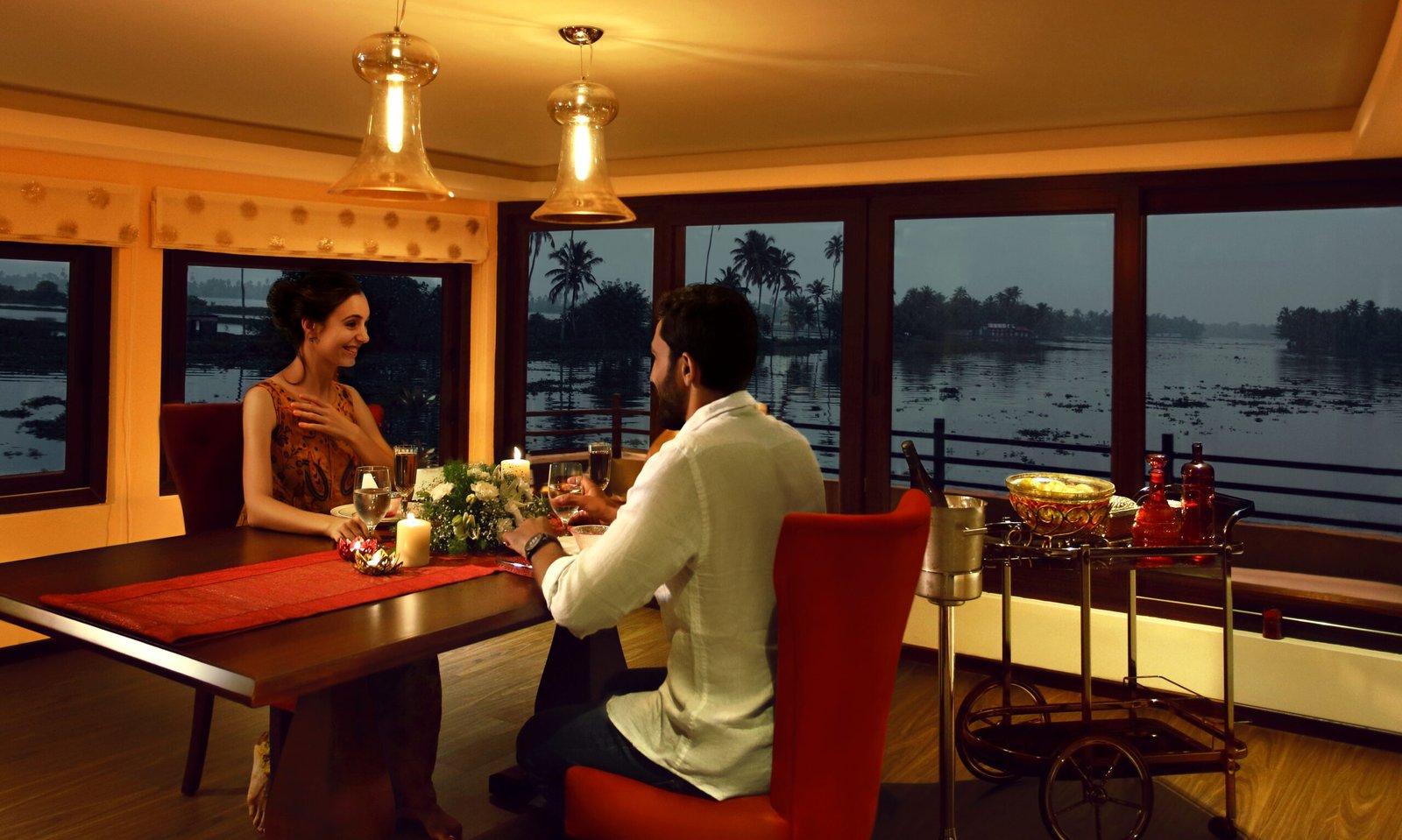
Year-round operation means monsoon expertise baked in. Their crews navigate monsoon constantly, so they’re experienced in what works and what doesn’t. Routes get adjusted for water levels without surprise or confusion. Activities get timed around weather patterns naturally. Food adapts to available ingredients. Safety protocols for heavy weather exist and get implemented. Guests arrive prepared because the operation informs them what to expect. The luxury houseboats themselves handle weather well. AC works regardless of conditions. Interior spaces stay comfortable. Shelter and covered areas function properly. Entertainment and comfort maintain regardless of what’s happening outside.
The Honest Truth
Monsoon is different. Not better. Not worse. Different. The weather is dramatic—not in a scenic postcard way, but in an intense, alive way. Crowds are absent. Solitude is achievable in ways winter never allows. Value is exceptional. Premium experiences become affordable. Authenticity is visible. Real Kerala functions without performance for tourists. The experience stays memorable. People remember monsoon trips distinctly, often surprised at how much they enjoyed something they initially feared.
Some travelers discover they prefer monsoon to winter peak season. The quiet, the value, the intensity, the authenticity appeal to them more than sunshine and crowds. Others prefer guaranteed clear weather and the social energy of peak season. Both perspectives are valid. What matters is understanding what monsoon actually offers instead of assuming it’s something to avoid.
Monsoon Backwater Cruises
Spice Routes: spiceroutes.in
Year-round operation, monsoon-experienced crew, adjusted routes, lowest annual rates.
Leave a Reply